
Sub-Micron Gold & Silver Plating Precision Services
Overcoming critical electrochemical challenges such as micro-porosity and thickness variance within deep-recessed geometries, we engineer high-purity precious metal layers that ensure exceptional electrical conductivity and flawless solderability. By deploying automated real-time chemical monitorin…
Overcoming critical electrochemical challenges such as micro-porosity and thickness variance within deep-recessed geometries, we engineer high-purity precious metal layers that ensure exceptional electrical conductivity and flawless solderability. By deploying automated real-time chemical monitoring and adjusting gold and silver deposition parameters, our workflows transform raw substrate conductivity limitations into highly stable, low-resistance contact interfaces. Backed by our rigorous IATF 16949-certified quality framework, we utilize advanced X-ray fluorescence testing to guarantee a highly uniform coating thickness distribution, thereby eliminating interfacial resistance and securing zero-defect bonding for mission-critical medical sensors and high-performance connectors.
Optimal Conductivity: Low contact resistance for stable signal transmission.Flawless Adhesion: Advanced pre-treatment ensures zero coating delamination.Precision Thickness: Automated micrometer-level control for tight tolerances.Extreme Durability: Superior tarnish and corrosion resistance performance.Request DFM Evaluation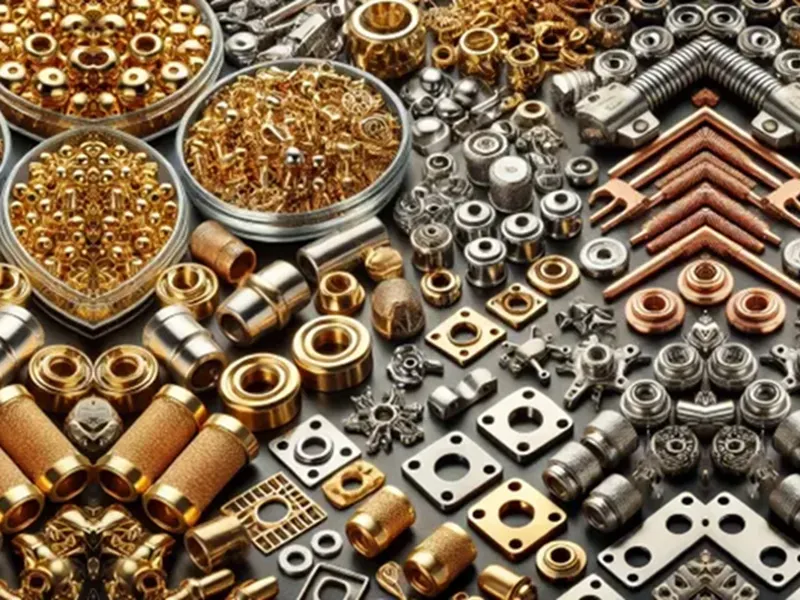
What is Gold & Silver Plating & The Engineering Science Behind the Surface
Gold and silver plating are sophisticated electrochemical deposition processes designed to enhance the functional surface properties of metal components. While gold provides unparalleled oxidation resistance and stable contact resistance for mission-critical electronics, silver offers the highest electrical and thermal conductivity of any metal. These high-purity coatings are indispensable for high-frequency signal transmission, medical-grade sensors, and aerospace connectors where performance failure is not an option.
Ultrasonic Cleaning & Surface Activation
Precision plating begins with molecular-level decontamination. Components undergo multi-stage ultrasonic degreasing and electrolytic cleaning to remove microscopic manufacturing oils and oxides. This is followed by a specialized acid activation bath, creating a chemically “active” surface that ensures perfect molecular adhesion of the precious metal layers and prevents any future coating delamination.
Barrier Layer Deposition (Under-plating)
To prevent the base metal from diffusing into the gold or silver layer, we apply a meticulously controlled barrier coat, typically nickel or copper. This intermediate layer enhances the structural integrity of the finish, improves wear resistance, and ensures that the final precious metal deposit maintains its high purity and functional properties over the component’s entire lifecycle.
Precision Electro-Deposition
The activated parts are submerged in highly regulated plating baths where current density and chemical concentration are monitored in real-time. By utilizing advanced pulse plating technology, we drive gold or silver ions to bond uniformly across complex geometries. This stage is engineered to meet exact thickness specifications, ensuring optimal conductivity while minimizing material waste on non-functional areas.
Anti-Tarnish & Final Verification
Silver plated components receive a specialized anti-tarnish treatment to prevent atmospheric oxidation without affecting conductivity. The final stage involves rigorous X-ray Fluorescence (XRF) inspection to non-destructively verify coating thickness and purity. Every batch is validated against IATF 16949 standards to guarantee zero defects and total compliance with RoHS and REACH environmental regulations.
Engineered Gold & Silver Plating Specifications & Capabilities
Kravzik delivers rigorous process control to ensure consistent, repeatable precious metal finishes. Our plating capabilities are calibrated to meet the extreme electrical conductivity and high-reliability requirements for precision medical sensors, high-frequency telecommunications, and aerospace interconnect systems.
Request DFM EvaluationPlating Specifications
MIL-DTL-45204 (Gold), ASTM B700 (Silver), and ISO 4521/2093 compliance for mission-critical industrial standards.
Coating Thickness Range
Gold: 0.1μm – 5.0μm (Hard/Soft Gold available).
Silver: 1.0μm – 25.0μm (Matte/Semi-bright available).Precision Tolerance Control
±0.05μm (50nm)—maintaining exact dimensional integrity for micro-stamped connectors and medical-grade components.
Electrical Performance
Silver (105% IACS) and Gold (70% IACS) options for ultra-low contact resistance and maximum signal integrity.
Solderability & Wire Bonding
Engineered surface energy optimized for lead-free soldering and high-reliability ultrasonic gold wire bonding.
Barrier Layer Chemistry
Customized under-plating (Electrolytic Nickel, Electroless Nickel, or Copper) to prevent base metal migration.
Corrosion & Tarnish Resistance
Exceeds 96-hour salt spray testing for gold; specialized anti-tarnish (chromate-free) treatment for silver longevity.
Available Finish Variations
99.9% Pure Gold/Silver, Hardened Cobalt-Gold, and High-Solderability Matte Silver for diverse engineering needs.
Compatible Substrates for Precision Gold & Silver Plating
The functional performance of precious metal coatings is dictated by the metallurgical compatibility between the substrate and the deposit. Kravzik engineers optimize pre-treatment activation and under-plating barrier protocols for various non-ferrous and specialized alloys to ensure zero chemical diffusion, maximum signal integrity, and exceptional adhesion in high-reliability applications.
Copper & Oxygen-Free Copper (C11000, C10100)
The industry benchmark for high-performance busbars and electrical terminals. To prevent the natural migration of copper atoms into the gold or silver layer—which can degrade conductivity and solderability—we utilize a high-density nickel barrier under-plate. This “diffusion-stop” layer ensures the final precious metal surface maintains 99.9% purity and stable contact resistance over the component’s entire service life.
Brass & Bronze Alloys (C2600, C3602, C5191)
Frequently utilized for precision-machined connectors and stamped spring contacts. The high zinc content in brass presents a risk of “zinc blooming” through the plating. Our process incorporates a specialized copper strike followed by an electrolytic nickel seal, effectively isolating the substrate and providing a smooth, non-porous foundation that enhances the aesthetic brilliance and functional durability of the gold or silver finish.
Stainless Steel & PH Alloys (SUS304, SUS316, 17-4 PH)
Essential for surgical instruments, medical sensors, and aerospace fasteners requiring biocompatibility or high strength. The inherent passive oxide layer of stainless steel makes conventional plating prone to delamination. We implement a rigorous “Wood’s Nickel Strike” activation sequence, which chemically penetrates the oxide skin to create a robust metallic bond, ensuring the precious metal coating remains intact even under extreme mechanical stress.
Aluminum Alloys (6061-T6, 7075, 5052)
Ideal for lightweight RF/Microwave housings and satellite chassis. Aluminum’s rapid oxidation requires a sophisticated multi-stage “Zincate” immersion pre-treatment. By replacing the natural oxide with a controlled zinc film, we facilitate a stable transition for subsequent copper and nickel layers, allowing for a high-adhesion gold or silver finish that meets stringent aerospace outgassing and conductivity standards.
Kovar & Nickel-Iron Alloys (ASTM F15, Invar 36)
Specified for hermetic sealing, optoelectronics, and microelectronic packaging. These alloys require precise thermal expansion matching. Our engineering team utilizes specialized de-scaling and high-purity “Soft Gold” plating parameters optimized for ultrasonic wire bonding and gold-tin (AuSn) eutectic soldering, guaranteeing the vacuum-tight integrity required for mission-critical electronic assemblies.
Essential Design Guidelines & Precious Metal Plating Limitations
Proactive design optimization ensures coating uniformity, optimal conductivity, and significant cost-efficiency for your high-performance components. Consider these critical geometric, metallurgical, and economic factors before finalizing your CAD models for gold or silver electrodeposition.
Gold and silver plating add a definitive layer of material to your component’s surface, typically ranging from 0.5μm to 5.0μm. For high-density connectors and press-fit pins, engineers must specify pre-plating tolerances to account for this growth. Because electroplating thickness can double on sharp external corners (the “dog-bone effect”), we recommend radius-edges on critical mating surfaces to ensure smooth mechanical assembly and consistent contact resistance.
Electrolytic gold and silver deposition rely on line-of-sight electrical current. Deep blind holes, narrow internal diameters, and complex “U” shapes will naturally receive a thinner coating than exterior surfaces due to the “Faraday Cage” effect. For critical internal signal transmission or corrosion protection, we advise designing auxiliary drainage holes or consulting with our team to optimize part orientation and specialized internal andoing during the plating cycle.
Given the high market value of precious metals, coating non-functional areas is economically inefficient. Kravzik provides advanced masking capabilities, including specialized paints, tapes, and custom-molded silicone plugs, to restrict gold or silver deposition to critical contact zones only. Designing parts with clear “stop-off” points for masking allows for significant cost savings without compromising the electrical performance of the functional surfaces.
In high-frequency RF and microwave applications, the “skin effect” means the signal travels primarily on the surface of the plating. Substrate imperfections like tool marks or scratches are magnified by the plating process and can cause signal loss. We maintain IATF 16949-level quality standards by recommending a maximum primary surface roughness of Ra 0.4μm or lower. Our facility offers integrated vibratory polishing and electropolishing to prep substrates for the highest possible reflectivity and signal integrity.
VISUAL EXCELLENCEData-Driven Showcase: Precision Gold & Silver Finishes
The functional reliability, electrical performance, and longevity of a precious-metal-plated component are determined by the specific metallurgical properties of the deposit. Explore our specialized gold and silver plating profiles to identify the exact technical specifications and functional finish required for your high-performance engineering assembly.
FUNCTIONAL PRECIOUS PLATINGHard Gold (Wear Resistant)
High Wear CyclesLow Contact ResistanceOxidation ProofStable FrictionOur hard gold plating involves the co-deposition of cobalt or nickel into the gold matrix, significantly increasing the Knoop hardness of the finish. This process is engineered for sliding contacts and high-cycle mating interfaces, where maintaining stable electrical contact under mechanical stress is paramount.
Gold Purity99.0% – 99.7% (Type I/II, Grade C)Hardness (Knoop)130 – 200 HKThickness RangeThickness RangePorosity LevelExceptional durability for high-cycle mating connectorsIdeal For:Plug-in connectors, spring probes, and sliding switchesMICROELECTRONIC ASSEMBLYSoft Gold (Bondable)
99.9% Pure AuWire BondableLead-Free SolderableBiocompatibleUtilizing a high-purity electrolyte, our soft gold plating yields a deposit free of metallic brighteners or hardeners. This results in a highly ductile, low-stress surface that is optimized for ultrasonic wire bonding and high-reliability soldering, ensuring the integrity of delicate microelectronic interconnects.
Gold Purity99.9% Minimum (Type III, Grade A)Hardness (Knoop)< 90 HKHeat ResistanceStable up to 250°C without discolorationSurface EnergyOptimized for Au/Al wire bonding adhesionPrimary BenefitSuperior ductility and reliable molecular bondingIdeal ForSemiconductor leads, medical sensors, and RF modulesPOWER & RF ENGINEERINGHigh-Conductivity Silver
Max ConductivityAnti-Tarnish TreatedLow Insertion LossSolderableOur silver plating process delivers the highest electrical and thermal conductivity of any surface finish. We utilize advanced pulse-plating technology to ensure a dense, non-porous deposit, followed by a specialized chromate-free anti-tarnish treatment to prevent atmospheric oxidation while maintaining ultra-low surface resistance.
Silver Purity99.9% Minimum (ASTM B700 Type I/II)Electrical Conductivity≥ 105% IACS (International Annealed Copper Standard)Finish AppearanceSemi-Bright to Bright Lustrous FinishTarnish ResistanceExceeds 48-hour sulfur-accelerated aging testsPrimary BenefitPrimary BenefitIdeal ForEV busbars, RF waveguides, and high-voltage terminals Request DFM EvaluationView Surface Treatment SolutionsSERVICES LIBRARYExplore Other Industrial Surface Treatment & Finishing Services Available
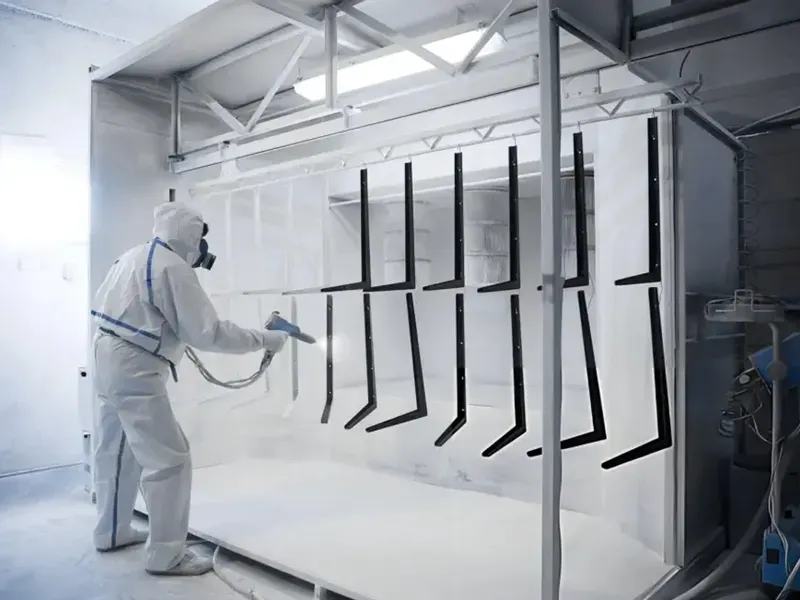
Powder Coating
Eliminate surface defects like orange peel on complex geometries. Our automated lines guarantee 1000h salt spray resistance for heavy-duty industrial components.
Learn More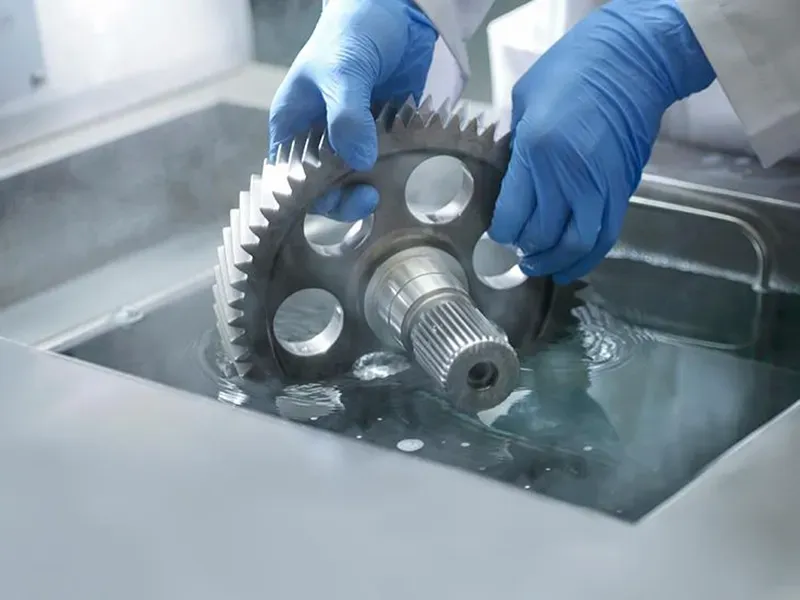
Degreasing
Eliminate microscopic contaminants that ruin precision plating. Achieve >40 dynes/cm surface energy for flawless secondary processing.
Learn More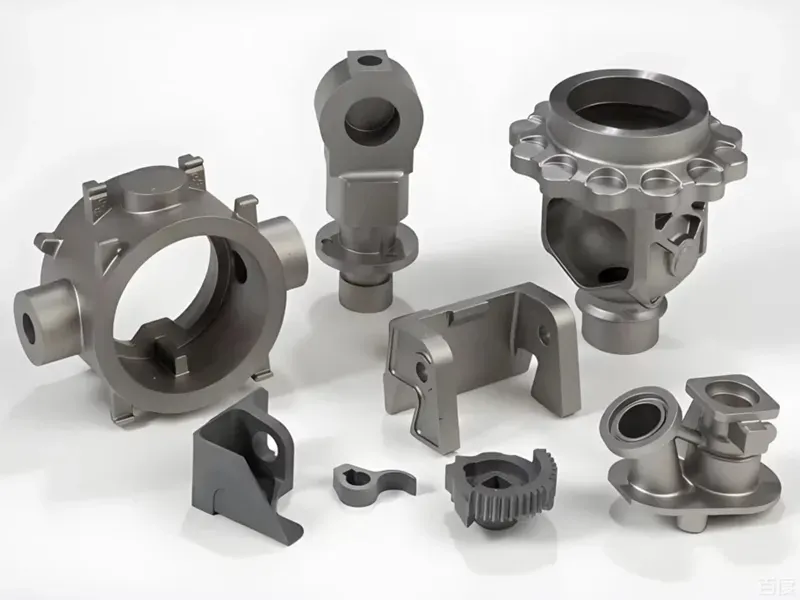
Nitriding
Forget brittle surfaces and dimensional warping. Kravzik delivers 1200 HV surface hardness while maintaining absolute ±5µm geometric precision.
Learn MoreRequest DFM EvaluationSee More Surface TreatmentTECHNICAL REFERENCEFrequently Asked Questions
Answers to common questions regarding precision, tooling, materials, and our integrated molding capabilities.We implement rigorous process control and automated chemical monitoring under IATF 16949 standards to ensure zero-defect plating for critical medical, robotics, and aerospace components.
Our facility utilizes specialized multi-stage ultrasonic cleaning and nickel barrier layers to create a robust molecular bond, preventing base metal diffusion and surface peeling.
Yes, we achieve ±0.05μm precision using automated pulse plating technology and verify every batch with non-destructive X-ray Fluorescence (XRF) inspection for total accuracy.
We offer precision masking and selective plating services, ensuring precious metal is only deposited on functional contact areas to significantly optimize material usage and costs.
We employ specialized activation protocols, including Zincate for aluminum and Wood’s Nickel Strike for stainless steel, to ensure maximum adhesion on traditionally challenging metallic substrates.
Our high-purity silver plating provides 105% IACS conductivity, while our specialized anti-tarnish treatments prevent surface oxidation that typically causes signal loss in RF and 5G modules.
Our Type III soft gold plating is specifically engineered with high ductility and 99.9% purity, ensuring reliable molecular bonding and thermal stability for semiconductor and sensor applications.
All our precious metal finishing processes are fully RoHS and REACH compliant, utilizing eco-friendly chemistry while meeting the most stringent international environmental and industrial performance standards.

Still have questions?
Our engineering team loves solving complex problems. Chat with us or send your drawing for a review.
Request DFM EvaluationReady to Manufacture With One Accountable Factory?
From in-house tooling to high-volume production — stamping, molding, plating and assembly under one IATF 16949 roof. Send your spec and volume, get a quote within 24 hours.