
Precision Insert Molding Services: Validated Metal-to-Plastic Integration
We eliminate tolerance stacking by manufacturing both metal inserts and plastic housings in-house, ensuring ±0.015mm critical tolerances across the integrated assembly. Utilizing all-electric vertical rotary machines to prevent insert shifting alongside plasma surface activation for robust mechanic…
We eliminate tolerance stacking by manufacturing both metal inserts and plastic housings in-house, ensuring ±0.015mm critical tolerances across the integrated assembly. Utilizing all-electric vertical rotary machines to prevent insert shifting alongside plasma surface activation for robust mechanical adhesion, our in-house tooling fabrication ensures end-to-end control of complex sealing requirements in demanding industrial applications while mitigating supply chain risk.
Micron-Level Precision: Critical tolerances maintained within ±0.015mm.Integrated Metal Stamping: In-house terminals and lead frame fabrication.High-Performance Polymers: Expert processing of PEEK, LCP, and PPS.Zero-Flash Guarantee: Precision shut-off tooling for clean contact surfaces.Request DFM Evaluation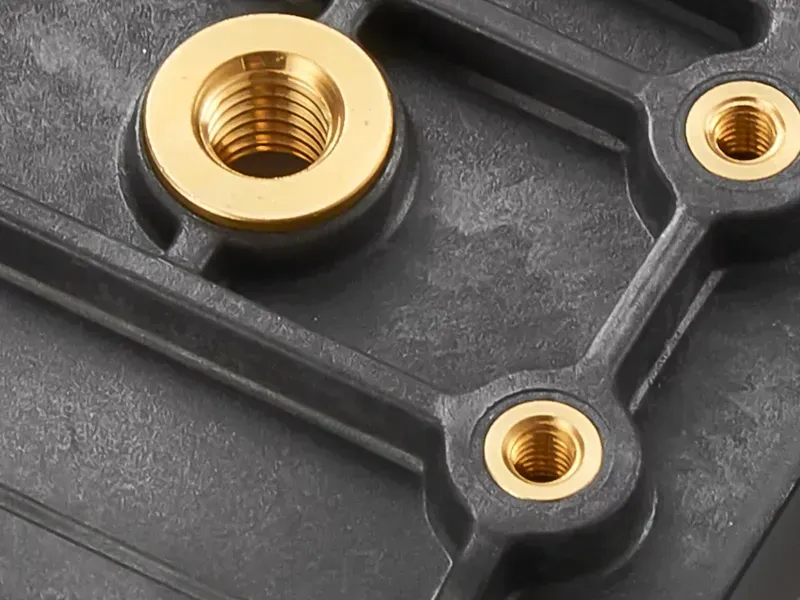
End-to-End Control: From Precision Die Components to Mass Production
When developing complex progressive dies for surgical instruments or precision robotic lead frames, component-level accuracy is non-negotiable. Outsourcing the machining of individual punches, matrices, and strippers introduces critical tolerance stacking and assembly misalignments. Kravzik eliminates this risk by centralizing the entire tooling lifecycle. We machine the intricate die components, assemble and test the complete tooling, and execute high-volume stamping production under one unified, rigid engineering standard.The Industry Standard
Fragmented AccountabilityDisconnected communication between the component machining shop, the mold assembler, and the final production facility.Tolerance StackingCompounded errors when assembling die components sourced from varying environmental controls and machinery.Delayed MaintenanceTooling adjustments and preventive maintenance require shipping dies back and forth, resulting in costly production downtime.IP VulnerabilityDispersing proprietary CAD/CAM data across multiple external vendors increases the risk of intellectual property exposure.The Kravzik Advantage
Single-Source EngineeringA synchronized workflow where the engineers who design the die oversee the component machining and the final stamping run.Absolute Clearance Control100% internal wire EDM, CNC milling, and precision grinding, ensuring punch-to-die clearances are matched at the micron level.Instant Die MaintenanceOn-site toolroom capabilities allow for immediate tooling modifications, progressive die sharpening, and seamless production continuity.Closed-Loop SecurityAll tooling designs, custom part geometries, and production parameters are strictly confined within our secure, centralized facility.CRITICAL PRODUCTION RISKSCore Insert Molding Challenges & NEV-Grade Solutions
High-voltage environments, relentless vibration, and strict safety regulations demand flawless metal-to-plastic integration. Whether for NEV battery busbars, aviation structural components, or precision robotic sensors, we engineer IP67/IP68-rated parts that conquer the industry’s most critical failure modes.
Resin Leakage (Flash) & Dimensional Drift
When outsourced metal inserts have inconsistent tolerances, micro-gaps form inside the injection mold. This causes plastic to leak (flash) onto conductive contact areas, leading to electrical shorts and rejected assemblies.
Pull-Out & Torque Failure
Standard inserts often lack the necessary mechanical locking strength to survive the aggressive thermal cycling and constant vibration inherent in New Energy Vehicles and heavy-duty automation.
Hermetic Seal Degradation & Cracking
Metal and plastic expand and contract at different rates. Without careful engineering, this “hoop stress” causes the polymer to micro-crack over time, allowing moisture ingress and causing complete component failure.
Technical Specifications & Material Expertise
Engineering precision into every material choice. We adhere to strict CpK > 1.33 stability standards, validated by in-line metrology and comprehensive material traceability.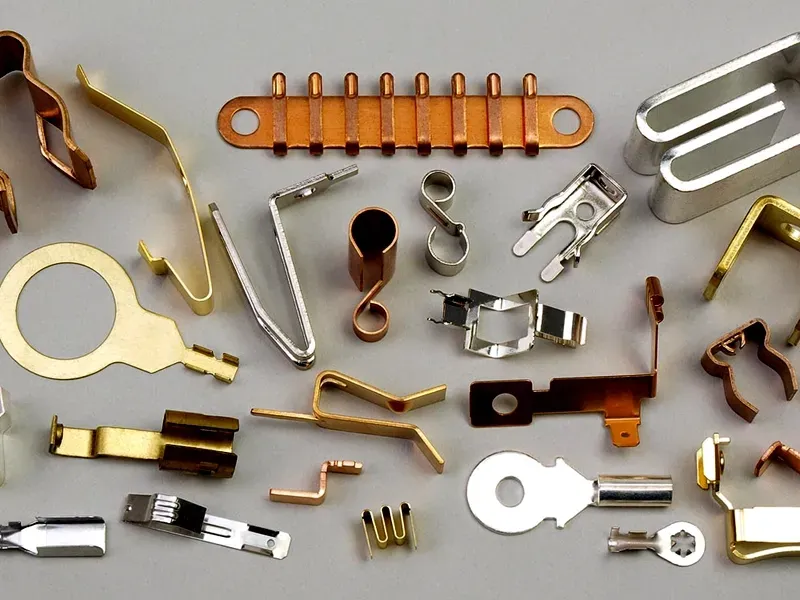
The Inserts (Precision Metals)
We do not rely on standard off-the-shelf hardware. Our in-house stamping and CNC turning divisions fabricate custom inserts tailored precisely to your application’s thermal, mechanical, and electrical conductivity requirements.
Copper and Phosphor Bronze
304/316 Stainless Steel
Brass and specialized aerospace-grade alloys
The Polymers (Engineering Resins)
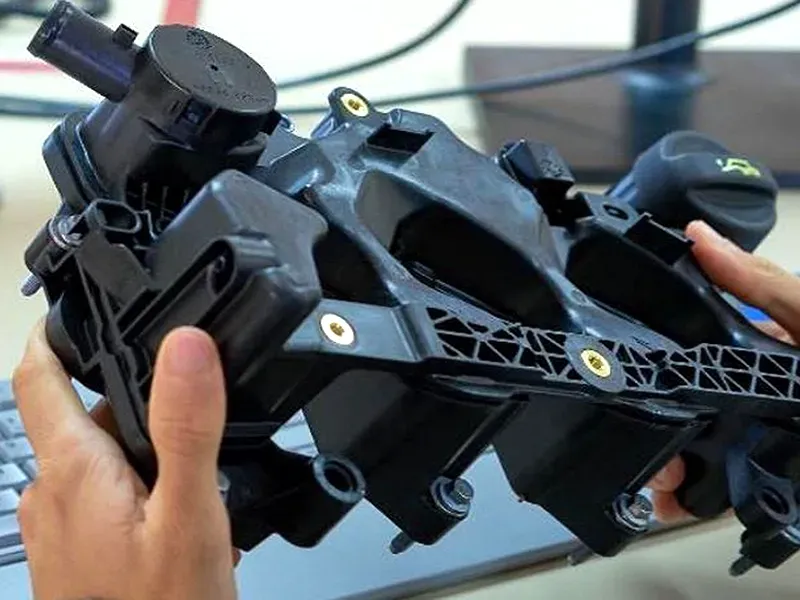
Metal transfers heat rapidly during the molding process. We utilize high-performance, engineering-grade thermoplastics engineered to withstand aggressive thermal shock and closely match the expansion coefficients of the embedded metals.
PEEK, PPS, and LCP
PA66+GF (Glass-filled variants)
Specialized biocompatible resins
Retention Features (Mechanical Anchoring)
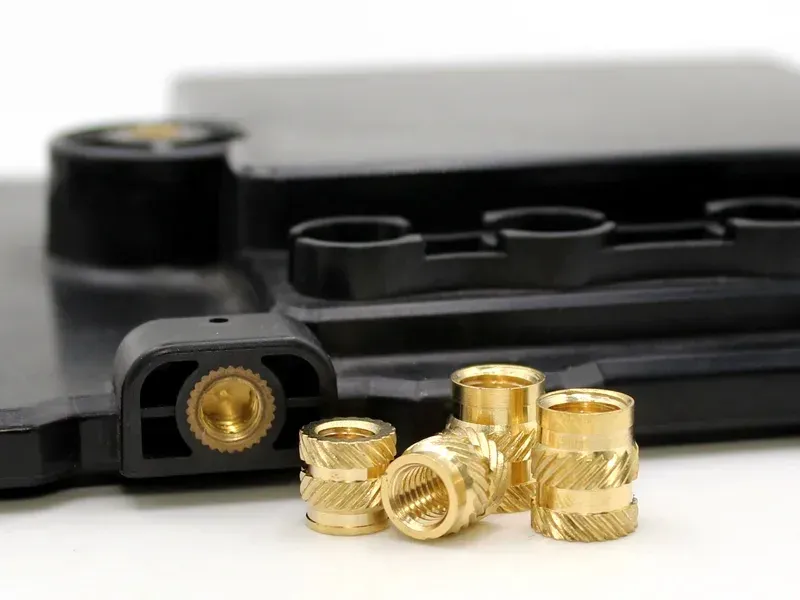
Chemical bonding is rarely sufficient for load-bearing components. We design and stamp robust mechanical locks directly into the metal insert’s geometry to guarantee absolute structural integrity.
Precision Knurling (Diamond/Straight)
Undercuts & Through-Holes
Shut-off Flanges
Specialized Equipment & Automation for Insert Molding
Standard horizontal machines compromise precision when gravity pulls heavy metal inserts out of alignment. To meet the zero-defect requirements of the New Energy Vehicle and Robotics sectors, we invest in purpose-built vertical molding equipment and fully automated loading systems.
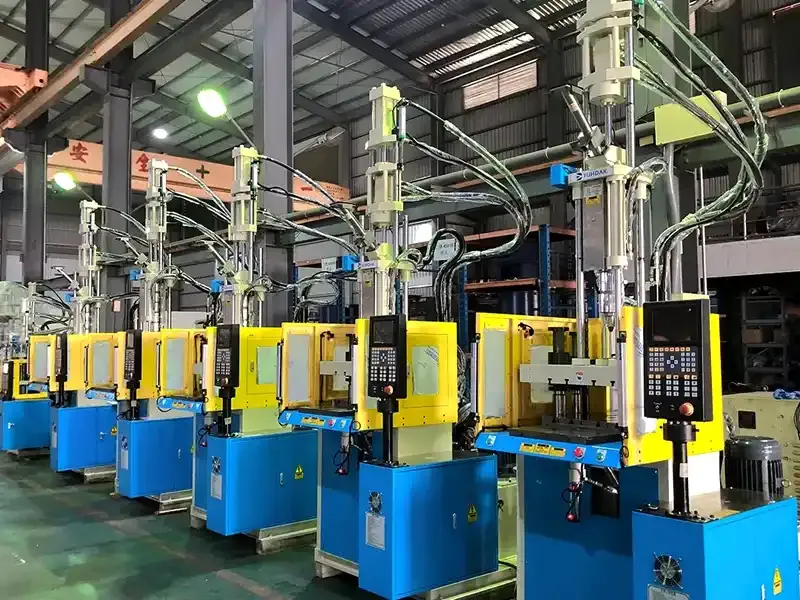
Vertical Rotary Injection Machines
Gravity is the ultimate tool for placement precision. Unlike horizontal setups where metal inserts can easily dislodge before the mold closes, our specialized vertical clamping systems keep complex metal lead frames and pins perfectly seated. The integrated rotary tables allow for simultaneous insert loading and plastic injection, increasing cycle efficiency while maintaining absolute positional accuracy down to the micron level.
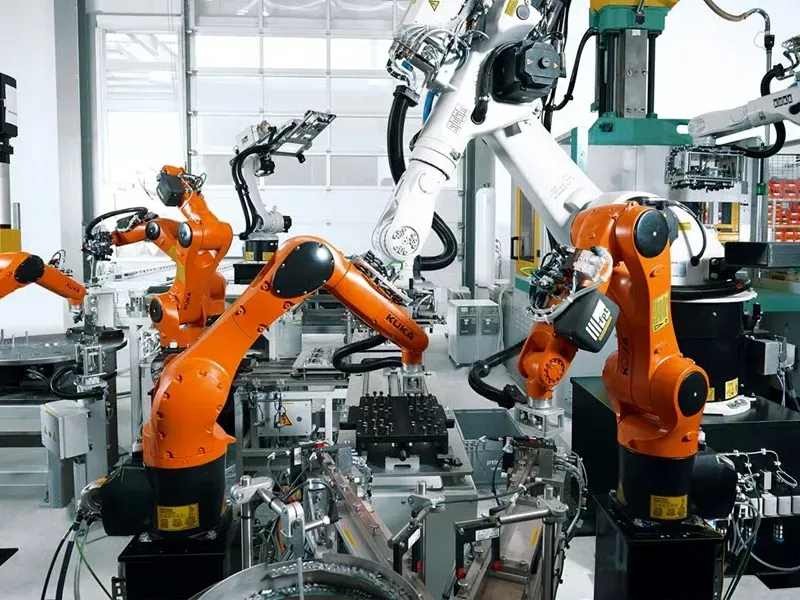
Automated Robotic Arms & Payload Systems
Human intervention introduces variability into high-precision manufacturing. We integrate advanced robotic arms for the precise loading of delicate stamped components and the safe extraction of finished molded parts. This full-scale automation ensures sub-millimeter repeatable placement, drastically lowers parts-per-million (PPM) defect rates, and guarantees stable production capacity for high-volume automotive and industrial orders.
Why Choose UsWhy Industry Leaders Choose Kravzik?
Delivering uncompromising precision, accelerated speed-to-market, and fully integrated manufacturing solutions for the most demanding technical applications.
Accelerated NPI & Rapid Turnaround
We compress your development cycles. By integrating agile manufacturing processes with advanced in-house capabilities, we deliver functional, test-ready components in days—helping you hit tight launch deadlines without sacrificing quality.
Production-Grade Precision & QA
Quality is non-negotiable for medical, aviation, and advanced robotics applications. We achieve strict dimensional tolerances backed by comprehensive in-house metrology, including CMM vision systems, complete FAI reporting, and ISO-compliant workflows.
Proactive DFM & Cost Optimization
We don’t just execute prints; we optimize them. Our engineering team provides rigorous Design for Manufacturability (DFM) reviews upfront. By identifying potential defects early, we significantly reduce tooling risks and overall unit costs.
Seamless Scalability & IP Protection
Grow your volume seamlessly without switching suppliers. We transition your projects from low-volume prototypes to high-yield mass production under one roof. All proprietary CAD designs are strictly protected under legally binding NDAs.
Applied Manufacturing & Technical Validation
Review our documented production records across injection molding and metal component integration. Examine how we resolve complex geometric challenges and strictly control critical dimensions to ensure structural and functional reliability in demanding environments.
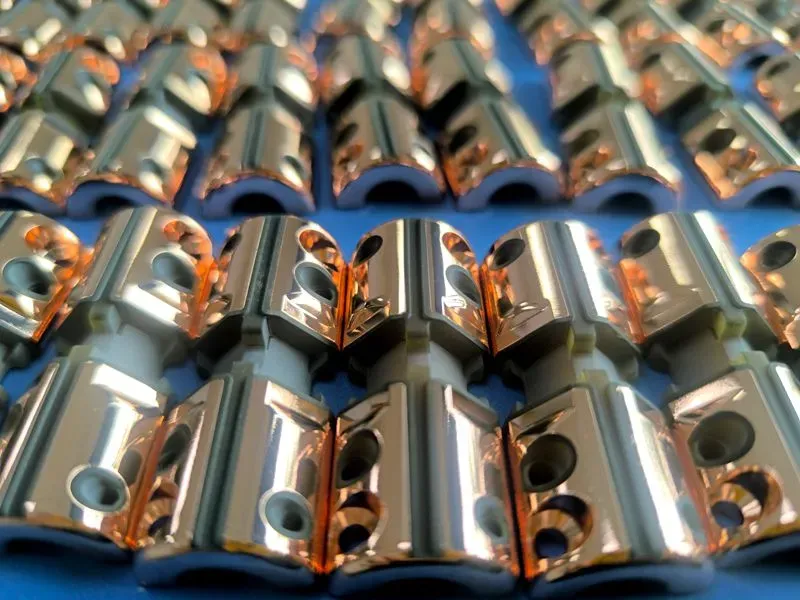
Overcoming RF Leakage: Engineering Zero-Gap Balun Assemblies for MRI Diagnostics
Client Type Leading Tier-1 Medical Imaging OEMProduction Volume 15,000+ units/yearMaterial Used Unfilled Polyetherimide (PEI)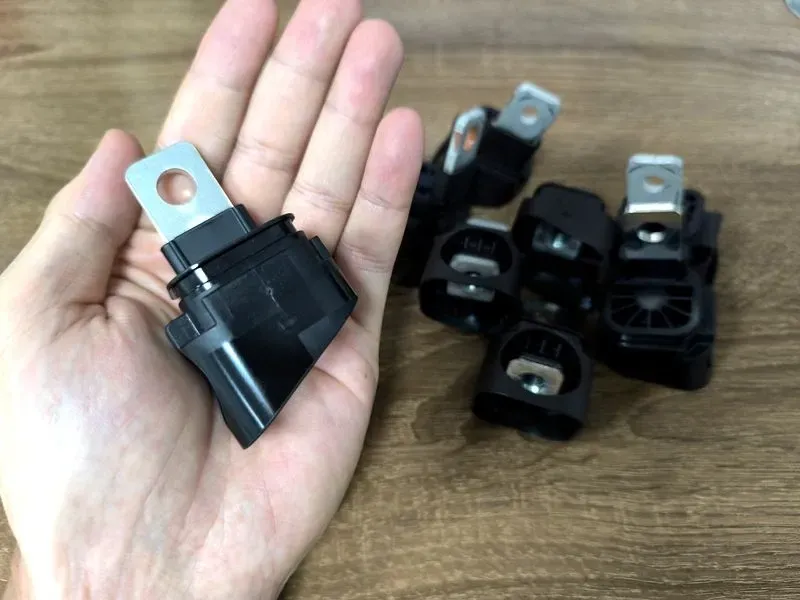
Overcoming CTE Mismatch: Engineering 800V Busbar Terminals for Commercial EVs
Client Type Leading Heavy-Duty Commercial EV Manufacturer - Tier 1Production Volume 250,000+ units/yearMaterial Used High-Purity C11000 Copper & PA6 GF30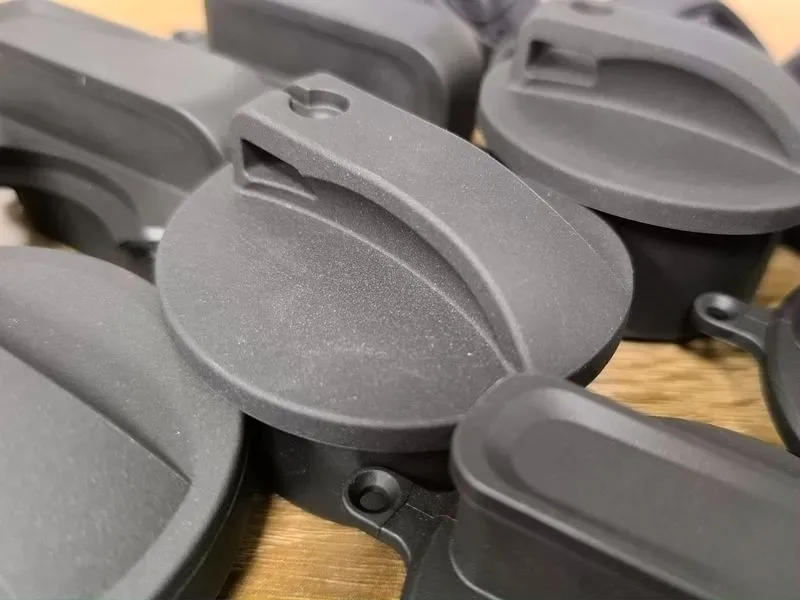
Solving Material Fatigue: Engineering a Monolithic FR-TPU Dust Cover for NEV Platforms
Client Type Leading Chinese NEV Manufacturer (Tier 1)Production Volume 500,000+ units/yearMaterial Used Custom Polyether-based FR-TPU (UL94 V-0)Request DFM EvaluationSee More Case StudiesSERVICES LIBRARYExplore Other Injection Tooling & Molding Services
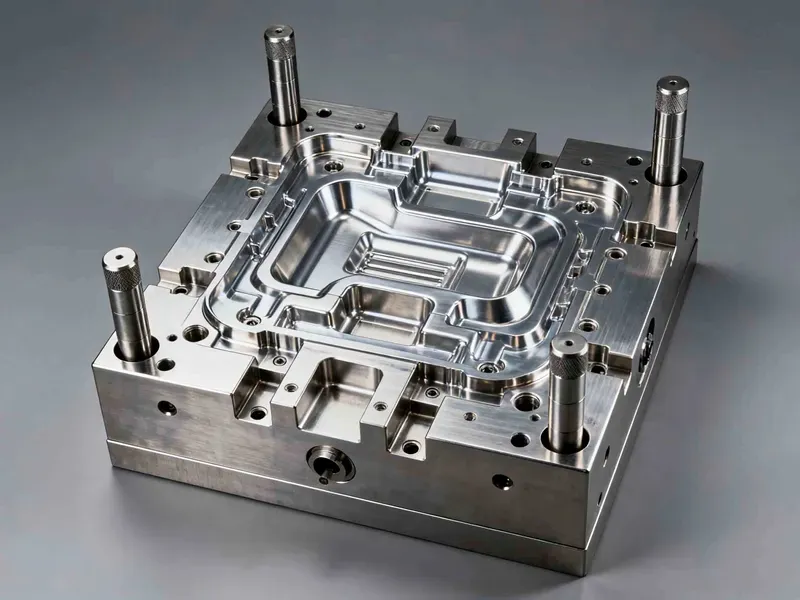
Injection Mold Design & Making
Eliminate unpredictable shrinkage and costly polymer warpage instantly. Our engineered Class 101 injection molds guarantee 1,000,000 continuous high-pressure shots.
Learn More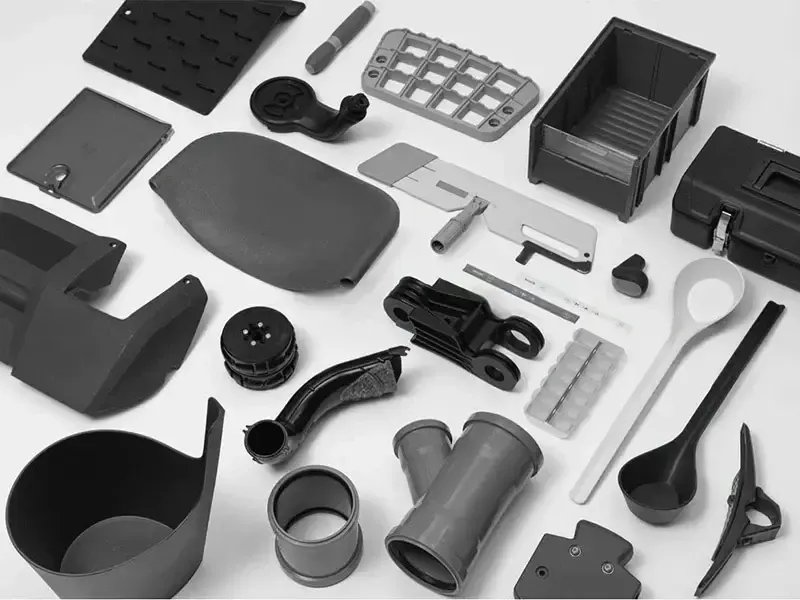
Overmolding
Harsh automotive environments frequently compromise critical electronic component seals. Our injection overmolding provides structural durability and consistent protection.
Learn MoreRequest DFM EvaluationSee More Molding ServicesTECHNICAL REFERENCEFrequently Asked Questions
Answers to common questions regarding precision, tooling, materials, and our integrated molding capabilities.Insert Molding involves encapsulating a pre-placed non-plastic component like brass or steel with molten resin to create a single bonded part. Overmolding typically involves molding a soft plastic resin, such as TPE, over a separate rigid plastic substrate to add grips or seals.
We mitigate cracking through rigorous DFM by optimizing plastic wall thickness and using resins with lower shrinkage rates or glass-filled reinforcements. Additionally, we pre-heat injection molding inserts to minimize thermal shock and internal stress during the cooling phase.
Yes, we are a true one-stop solution with a complete in-house high-speed metal stamping division. We manufacture custom terminals, lead frames, and contacts to ensure a perfect micron-level fit between the metal and plastic mold cavities.
By controlling both metal stamping and plastic molding in-house, we eliminate tolerance stack-up issues common in fragmented supply chains. We typically hold critical dimensions to ±0.015mm – ±0.02mm, ensuring high-performance reliability for automotive and medical applications.
To ensure high torque-out and pull-out resistance, we recommend designing inserts with diamond or straight knurling, undercuts, or grooves. For stamped parts, adding holes or bent tabs allows molten plastic to flow through and “lock” the component permanently.
We prevent flash through precision “shut-off” mold designs that create a tight seal between the mold steel and the metal insert. Our 100% CCD automated vision inspection systems further verify that all conductive areas remain clean and flash-free before shipment.
Yes, we offer bridge tooling using softer steel and manual insert loading to cost-effectively support pilot runs of 500 to 5,000 units. This allows you to validate designs and material compatibility before investing in fully automated multi-cavity hardened molds.
We adhere to IATF 16949 standards and maintain a digital thread that links every part to its specific resin batch, metal coil source, and machine parameters. This comprehensive traceability ensures risk mitigation and consistent quality for global leaders in high-demand sectors.

Still have questions?
Our engineering team loves solving complex problems. Chat with us or send your drawing for a review.
Request DFM EvaluationReady to Manufacture With One Accountable Factory?
From in-house tooling to high-volume production — stamping, molding, plating and assembly under one IATF 16949 roof. Send your spec and volume, get a quote within 24 hours.