
Dimensional-Stable Polishing & Buffing Precision Services
Overcoming inherent mechanical finishing challenges such as micro-structural “orange peel” textures and residual tool marks on high-precision substrates, we engineer flawless, defect-free surface profiles while maintaining strict geometric tolerances. By deploying specialized buffing compounds and …
Overcoming inherent mechanical finishing challenges such as micro-structural “orange peel” textures and residual tool marks on high-precision substrates, we engineer flawless, defect-free surface profiles while maintaining strict geometric tolerances. By deploying specialized buffing compounds and executing automated, multi-stage polishing cycles, our workflows systematically eliminate microscopic topography variations rather than causing edge rounding or dimensional degradation. Backed by our rigorous IATF 16949-certified quality framework, we guarantee a consistent Ra 0.05μm mirror-finish across complex geometries, thereby preventing stress concentration points and ensuring absolute cosmetic and structural integrity for mission-critical robotics and automation components.
Mirror Finish: Achieving Ra 0.05μm ultra-smooth surfaces.Edge Perfection: Precision deburring and sharp corner smoothing.Material Mastery: Expert polishing for various metals and plastics.Strict Consistency: Repeatable high-gloss quality across batches.Request DFM Evaluation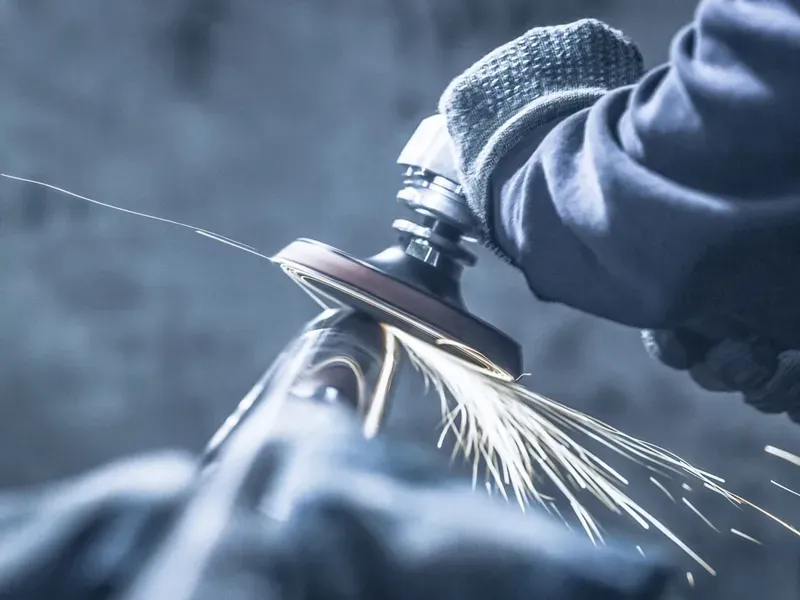
What is Polishing & Buffing: The Science of Surface Excellence
Polishing and buffing are critical mechanical finishing processes that utilize specialized abrasives and rotating wheels to eliminate surface defects like tool marks, pits, and "orange peel." Beyond aesthetics, these processes improve corrosion resistance and fatigue strength, providing the essential Ra finish required for high-precision robotics, medical instruments, and luxury automotive hardware.
Surface Preparation & Deburring
Components undergo thorough ultrasonic cleaning and manual deburring to remove manufacturing oils and localized flashing from the stamping or molding process. This ensures an ultra-clean substrate, preventing surface contamination during the abrasive stages and ensuring uniform finishing across complex geometries.
Multi-Stage Abrasive Polishing
Utilizing a sequence of progressively finer abrasive belts and wheels, we systematically remove parting lines, tool marks, and surface irregularities. This controlled material removal is vital for achieving the target Ra roughness while strictly maintaining the critical dimensional tolerances of your metal or plastic parts.
Precision High-Gloss Buffing
Using soft cloth wheels and high-grade polishing compounds, we “color” the surface to achieve a brilliant, mirror-like finish. This stage smoothens the microscopic peaks of the material, resulting in a low-friction, high-reflectivity surface that meets the most demanding aesthetic and functional standards.
Final Cleaning & Quality Verification
Every part is cleaned of residual compounds and subjected to rigorous quality checks. We utilize profilometers to verify Ra surface roughness and high-intensity lighting to ensure zero visual defects, ensuring full compliance with IATF 16949-level standards and your specific engineering requirements.
Engineered Polishing & Buffing Specifications & Capabilities
Kravzik provides rigorous process control to ensure consistent, repeatable finishing results. Our polishing and buffing capabilities are calibrated to meet the ultra-low Ra values and tight dimensional tolerances required for high-precision metal stamping dies, medical instruments, and complex robotic assemblies.
Request DFM EvaluationSurface Roughness (Ra)
Achieving Ra 0.05μm – 0.4μm (Mirror to Satin) depending on material and functional requirements.
Dimensional Tolerance Control
Maintaining ±0.005mm (5μm) precision—ensuring critical fitment for high-tolerance machined and stamped components.
Material Versatility
Expert processing of Stainless Steel, Aluminum, Brass, and high-performance plastics (PEEK, ABS, PC).
Finishing Classifications
Industry-standard finishes from #4 Brushed/Satin to #8 Super-Mirror (High-Reflectivity) levels.
Maximum Part Capacity
Handling components up to 1500mm x 1000mm with a weight capacity of up to 800kg.
Quality Verification
100% visual inspection under high-intensity 5000K lighting and digital profilometer surface mapping.
Compatible Material Substrates for Precision Polishing & Buffing
The final Ra value and surface integrity depend heavily on the substrate's metallurgical properties and thermal sensitivity. Kravzik engineers utilize material-specific abrasive sequences and cooling protocols to achieve mirror-grade finishes while preventing surface distortion or structural degradation in critical components.
Stainless Steel (304, 316L, 17-4 PH)
Essential for medical and food-grade components requiring high corrosion resistance. We employ low-RPM buffing techniques and pH-neutral compounds to ensure the chromium-oxide passivation layer remains intact, preventing localized pitting while achieving a flawless #8 mirror finish.
Aerospace Aluminum (6061-T6, 7075)
Frequently used for lightweight robotics and aerospace housings. Due to aluminum’s high ductility, we utilize specialized non-embedding abrasive wheels and precise pressure regulation to eliminate “dragging” or surface smearing, ensuring high reflectivity without compromising dimensional accuracy.
Hardened Tool Steels (P20, H13, D2, S7)
Critical for injection molds and stamping dies where surface smoothness dictates part quality. We utilize a multi-stage diamond compound progression—down to 1-micron—to remove EDM scales and CNC tool marks, preventing “orange peel” defects while maintaining razor-sharp mold edges.
High-Performance Plastics (PEEK, PC, ABS)
Vital for transparent medical housings and automotive interiors. To overcome the risk of thermal deformation or “clouding” caused by friction, we utilize ventilated cotton buffs and specialized low-friction liquid waxes, delivering optical-grade clarity without inducing internal stress or surface melting.
Copper & Brass Alloys (C360, C110, C260)
Widely used in electrical connectors and luxury hardware. We address the rapid oxidation characteristic of copper alloys by implementing streamlined post-polish ultrasonic cleaning and immediate application of anti-oxidant inhibitors, preserving the brilliant luster for long-term functional and aesthetic use.
Essential Design Guidelines & Process Limitations
Proactive design optimization prevents production delays and ensures your components meet exact aesthetic and functional requirements while maintaining dimensional integrity. Consider these critical geometric and mechanical factors before finalizing your CAD models for the polishing and buffing process.
Mechanical polishing is a subtractive process. To achieve a high-gloss or mirror finish, Kravzik engineers typically remove between 0.005mm to 0.02mm of surface material depending on the initial substrate roughness. For high-precision components, ensure your pre-polish machining or molding dimensions account for this material loss to maintain critical assembly clearances and thread fits.
Buffing and polishing require direct physical access for rotating wheels, abrasive belts, or polishing bobs. Deep internal recesses, narrow channels (less than 5mm width), and small-diameter blind holes are considered “shadow areas” where uniform finishing is physically restricted. We recommend designing with generous internal radii to allow tools to maintain consistent contact pressure across all surfaces.
The high-speed friction of buffing naturally tends to “soften” or round off sharp external edges and corners. If your design requires razor-sharp edges for functional mating or sealing, please specify “No-Buff Zones” or masking requirements. For standard components, a minimum external radius of 0.5mm is advised to ensure finishing uniformity without excessive material thinning at the edges.
While polishing eliminates minor tool marks and EDM scales, it cannot effectively “fill” deep surface pits or severe “orange peel” resulting from poor stamping die quality or improper injection molding parameters. Attempting to polish out deep defects may lead to localized “dishing” and loss of flatness. We recommend a maximum pre-polish surface roughness of Ra 1.6μm to ensure the most cost-effective and optically clear results.
High-friction buffing generates significant localized heat. Thin-walled plastic components or delicate metal stampings (under 0.8mm thickness) are susceptible to thermal distortion or warping during intensive polishing cycles. For these heat-sensitive parts, Kravzik utilizes specialized low-RPM parameters and intermittent cooling protocols to protect the part’s geometric stability, which may affect total processing time.
VISUAL EXCELLENCEVisual & Tactile Showcase: Engineered Surface Refinement
The functional performance and aesthetic impact of a component are defined by the precision of its mechanical finish. Explore our standardized polishing profiles to identify the exact surface roughness (Ra), reflectivity, and tactile properties required for your specific engineering application.
MECHANICAL ULTRA-FINISHINGUltra-High Gloss Mirror Finish
Optical ClarityZero Tool MarksHigh ReflectivityMedical GradeThe substrate is subjected to a multi-stage progressive buffing cycle using high-grade diamond compounds. This process eliminates all microscopic surface peaks, creating a flawless, liquid-like reflection essential for optical components and sterile medical environments.
Surface RoughnessRa < 0.05μm (2 μin)Gloss Level> 95% Specular ReflectivityAbrasive MediumFine Diamond Paste & Cotton BuffsPrimary BenefitMaximum hygiene and peak aesthetic valueIdeal ForSurgical tools, optical reflectors, luxury automotive trimDIRECTIONAL TEXTURE FINISHINGPrecision Brushed Satin Finish
Anti-GlareScratch MaskingTactile GripIndustrial AestheticUtilizing specialized abrasive belts or wire wheels, we create a uniform, directional linear grain across the part surface. This finish is engineered to provide a premium matte appearance while effectively masking fingerprints and minor handling scratches.
Surface RoughnessRa 0.4μm – 0.8μm (16-32 μin)Visual TextureUniform Linear Grain / Non-ReflectiveAbrasive MediumAluminum Oxide / Silicon Carbide BeltsPrimary BenefitSuperior durability and fingerprint resistanceIdeal ForElectronic enclosures, control panels, aerospace leversFUNCTIONAL SURFACE REFINEMENTHigh-Performance Technical Polishing
Friction ReductionScale RemovalStress ReliefTooling PrepFocused on functional optimization rather than pure aesthetics, this process removes EDM scales and CNC tool marks. It is specifically designed to improve part ejection in injection molds and reduce mechanical friction in high-cycle robotic joints.
Surface RoughnessRa 0.1μm – 0.3μm (4-12 μin)ReflectivitySoft Luster / Semi-Bright FinishAbrasive MediumFelt Bobs & Specialized Polishing WaxPrimary BenefitEnhanced fatigue life and mold release efficiencyIdeal ForInjection mold cavities, robotic actuators, gear surfaces Request DFM EvaluationView Surface Treatment SolutionsSERVICES LIBRARYExplore Other Industrial Surface Treatment & Finishing Services Available
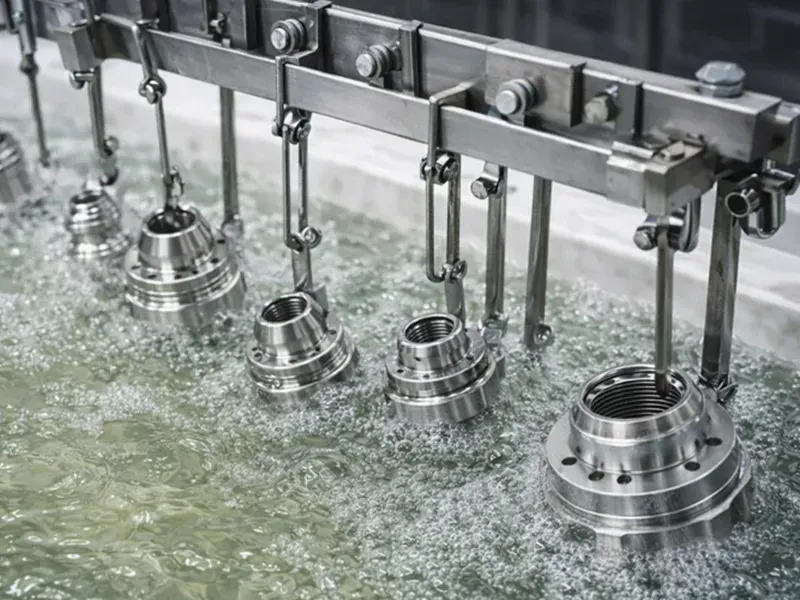
Electropolishing
Eliminate microscopic burrs and surface contaminants instantly. Our electropolishing achieves Ra < 0.1μm finishes for flawless medical and semiconductor components.
Learn More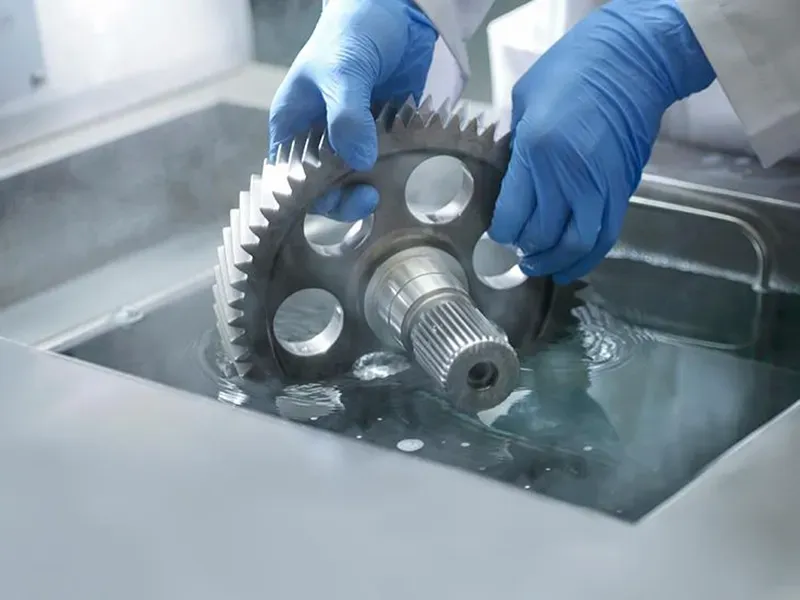
Degreasing
Eliminate microscopic contaminants that ruin precision plating. Achieve >40 dynes/cm surface energy for flawless secondary processing.
Learn More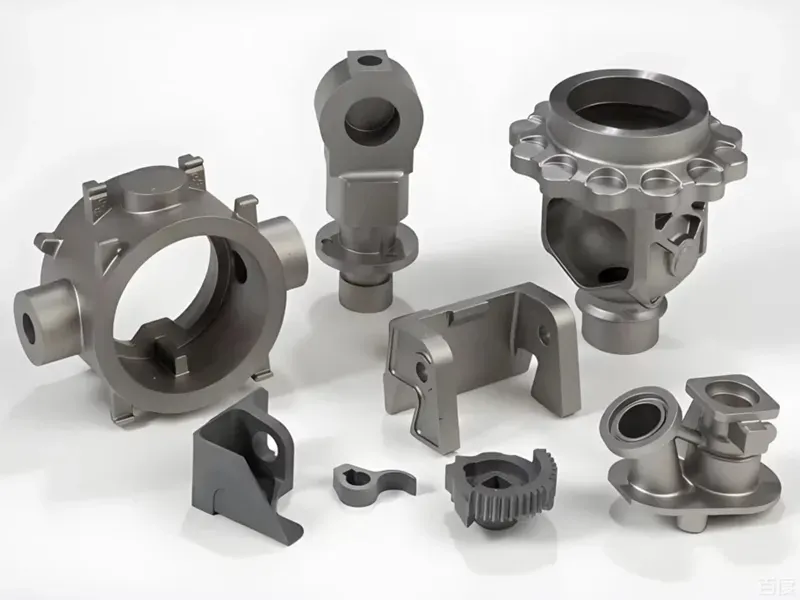
Nitriding
Forget brittle surfaces and dimensional warping. Kravzik delivers 1200 HV surface hardness while maintaining absolute ±5µm geometric precision.
Learn MoreRequest DFM EvaluationSee More Surface TreatmentTECHNICAL REFERENCEFrequently Asked Questions
Answers to common questions regarding precision, tooling, materials, and our integrated molding capabilities.We consistently achieve Ra values as low as 0.05μm (mirror finish) using multi-stage diamond compound polishing for critical medical and optical applications.
Our engineers calculate precise material removal rates, typically 0.005mm to 0.02mm, to ensure critical assembly fits remain within engineering specifications after finishing.
Yes, Kravzik specializes in finishing diverse substrates including stainless steel, aluminum, and high-performance plastics like PEEK or PC using material-specific abrasive protocols.
Our technical polishing effectively eliminates EDM scales and machining marks, though we recommend a pre-polish roughness of Ra 1.6μm for optimal cost-efficiency.
We utilize IATF 16949-level quality controls, including standardized abrasive sequences and profilometer surface mapping, to guarantee repeatable results for every production batch.
Absolutely. We review your CAD models to identify “shadow areas” or geometry constraints, helping you minimize production costs and maximize surface uniformity.
Our facility handles components up to 1500mm by 1000mm and weights up to 800kg, supporting both large structural frames and micro-medical parts.
Every part undergoes 100% visual inspection under high-intensity lighting and digital profilometer testing to confirm compliance with your specified Ra requirements.

Still have questions?
Our engineering team loves solving complex problems. Chat with us or send your drawing for a review.
Request DFM EvaluationReady to Manufacture With One Accountable Factory?
From in-house tooling to high-volume production — stamping, molding, plating and assembly under one IATF 16949 roof. Send your spec and volume, get a quote within 24 hours.