
Precision Overmolding Services: High-Bond Multi-Material Integration
We engineer complex overmolded components by ensuring robust chemical adhesion and mechanical interlocking between dissimilar substrates for automotive and demanding industrial applications. By mitigating material incompatibility and preventing flash generation through scientific molding, we optimi…
We engineer complex overmolded components by ensuring robust chemical adhesion and mechanical interlocking between dissimilar substrates for automotive and demanding industrial applications. By mitigating material incompatibility and preventing flash generation through scientific molding, we optimize boundary integrity within our IATF 16949 compliant production environment. Our methodology leverages in-house tooling fabrication to deliver unmatched structural consistency for your most challenging multi-component requirements.
Flawless Adhesion: Ensuring absolute chemical and mechanical bonding.Flash-Free Boundaries: Delivering pristine multi-material parting lines.Material Compatibility: Optimizing complex thermoplastic elastomer combinations.Structural Integrity: Maximizing component durability and functional seal.Request DFM Evaluation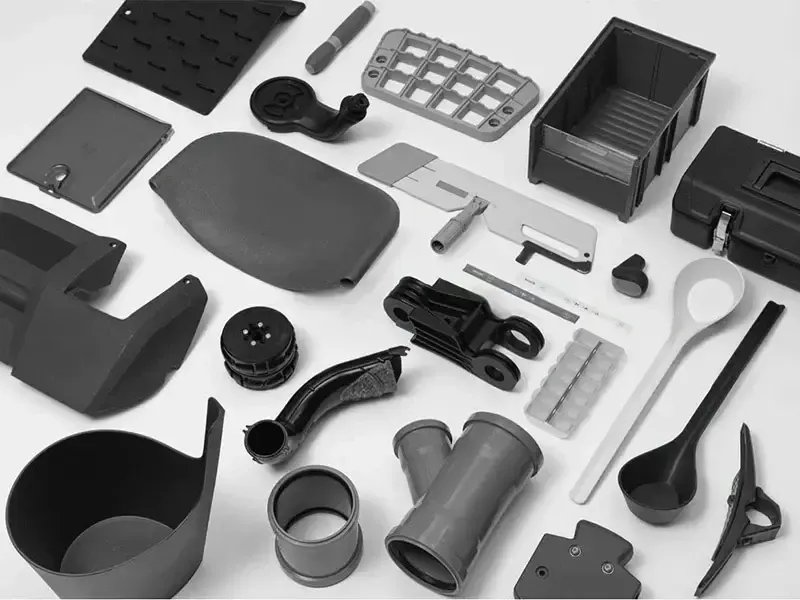
Technical Specifications & Material Expertise
Engineering precision into every material choice. We adhere to strict CpK > 1.33 stability standards, validated by in-line metrology and comprehensive material traceability.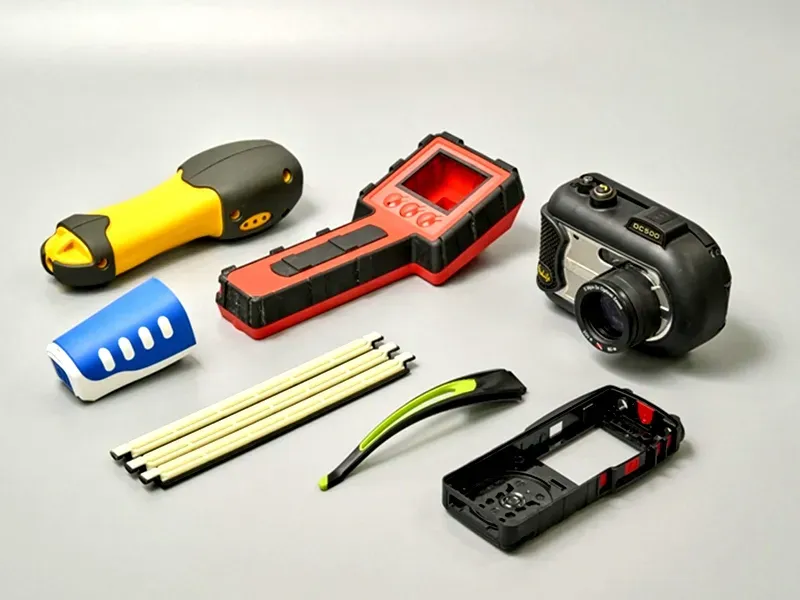
High-Affinity Chemical Bonding
Selecting thermodynamically compatible resins allows polymer chains to interpenetrate at the melt interface, forming an unbreakable cohesive seal. Failure to achieve exact melt temperatures prevents this molecular entanglement, resulting in total elastomeric peel-off during end-user operation.
PC and TPU (Excellent Adhesion)
ABS and TPE (Optimal Entanglement)
PC/ABS Blends and TPU
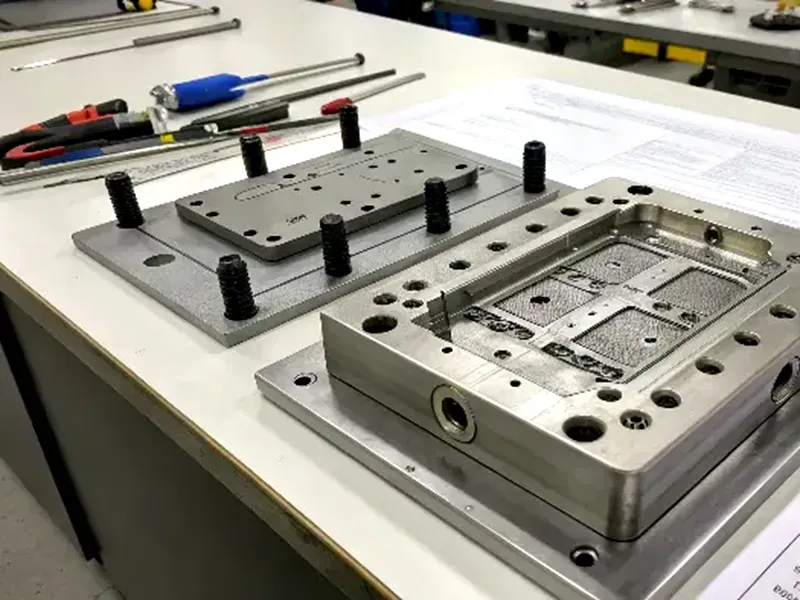
Grade-Specific Adhesion Parameters
Certain semi-crystalline substrates present low surface energy barriers that resist standard elastomeric wetting, risking localized edge lift and fluid ingress. Overcoming this repellant nature requires specifying chemically modified overmolding grades and strictly controlling substrate moisture content before processing.
PP and TPV (Requires modified grades)
PA6/PA66 and TPE (Moisture control critical)
PP and EPDM (Adhesion promoters needed)
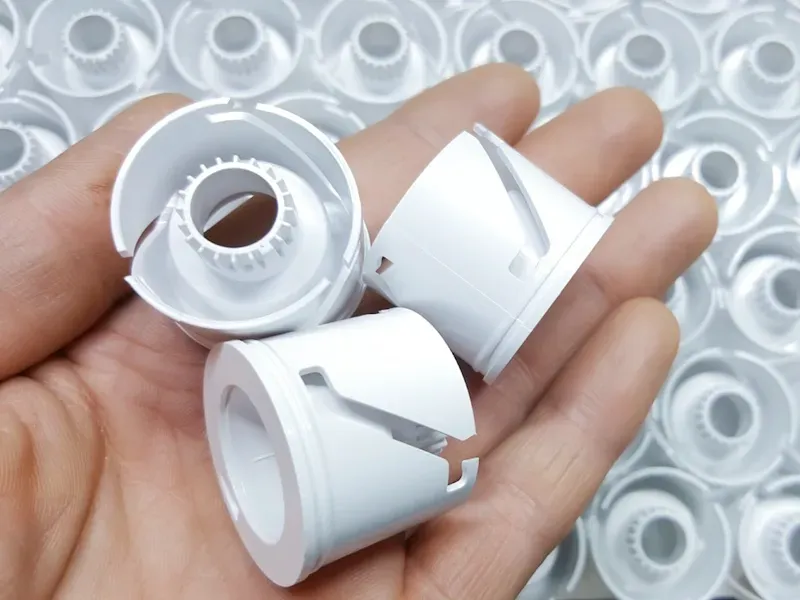
Mechanical Interlocking Necessity
Attempting to bond chemically inert crystalline plastics directly to incompatible elastomers without physical anchors guarantees structural failure immediately upon mold ejection. We deploy strategic substrate undercuts, deep surface texture, and through-holes to enforce rigid mechanical retention regardless of inherent chemical incompatibility.
POM and TPU (Mechanical lock mandatory)
Standard Plastics and LSR (Requires primer or locks)
PE and TPE (Strict physical anchoring)
Overmolding Engineering and Design Guidelines
Improper part geometry in multi-material applications directly causes catastrophic delamination, severe warp, and unacceptable cosmetic defects during continuous production. To ensure robust chemical bonding and dimensional stability, we require rigorous adherence to specialized design-for-manufacturability principles tailored for thermoplastic elastomer encapsulation.
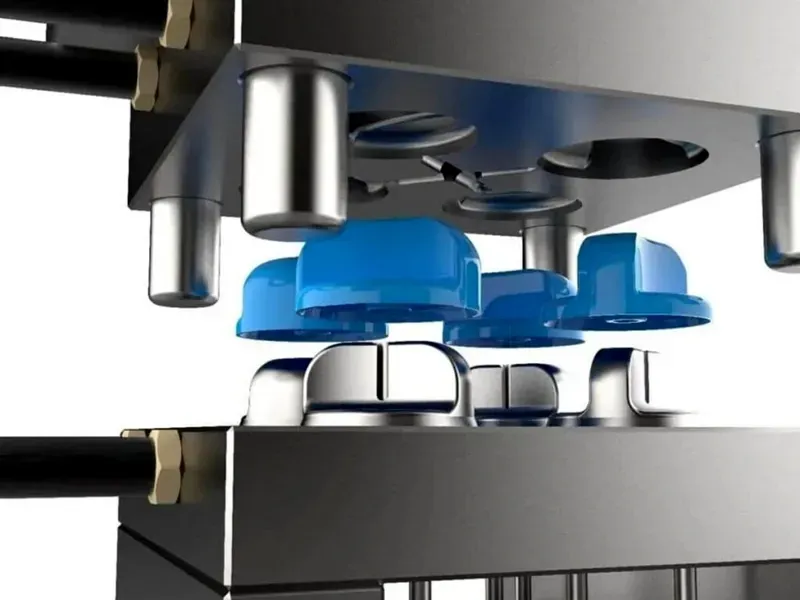
Elastomer Wall Thickness Optimization
Disproportionate soft-touch layers induce severe differential shrinkage, resulting in substrate warpage and unacceptable sink marks that compromise the final environmental seal. Maintaining a uniform elastomer thickness between 1.5mm and 3.0mm ensures consistent cooling rates and prevents localized thermal degradation.
Target Ratio: Maintain soft-to-hard material thickness ratio below 1:2.
Transitions: Utilize gradual radii to prevent high stress concentrations.
Drafting: Apply adequate draft angles to accommodate tacky elastomer ejection.
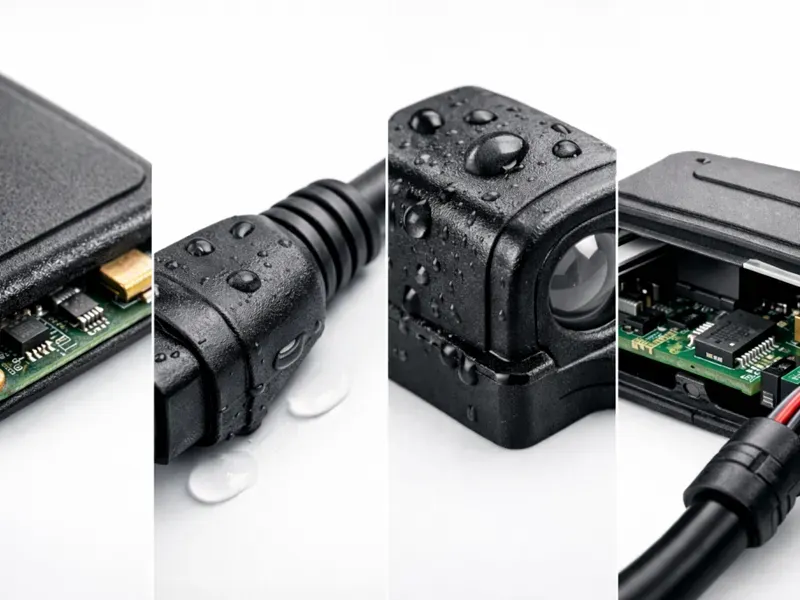
Strategic Gating and Micro-Venting
Inadequate cavity venting traps pressurized gases, causing localized dieseling and short shots that permanently weaken the substrate bond interface. Positioning the elastomer gate at the thickest wall section minimizes excessive shear stress and directs uniform flow toward critical interlocking features.
Gate Type: Prioritize pinpoint or sub-gates for clean automated degating.
Vent Depth: Maintain 0.01mm to 0.03mm depths to prevent material flash.
Flow Length: Limit flow ratios to prevent premature thermoplastic freezing.
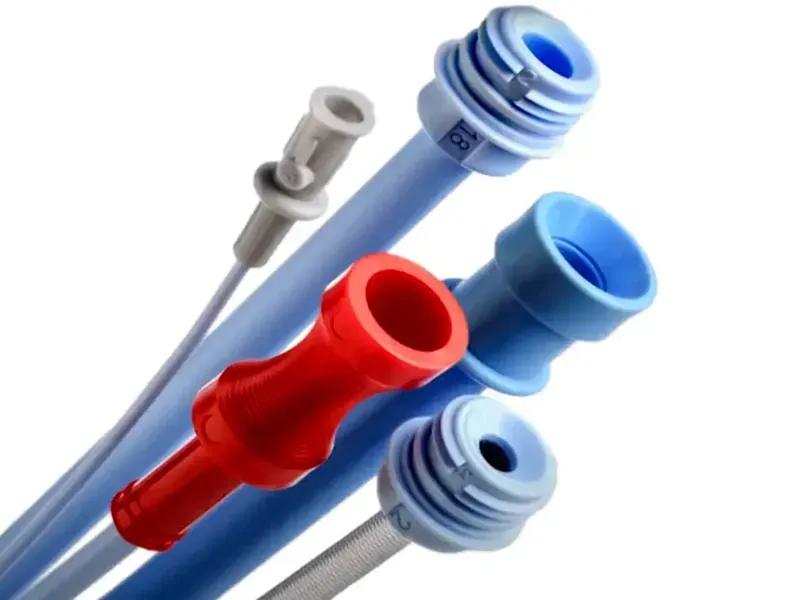
Mechanical Interlocks and Substrate Texture
Relying exclusively on chemical adhesion exposes the component to catastrophic peel failure when subjected to heavy shear forces or extreme thermal cycling. Integrating physical undercuts and optimizing substrate surface roughness dramatically increases the bonding surface area to guarantee fail-safe mechanical retention.
Interlock Design: Incorporate structural through-holes, stepped edges, or dovetails.
Mold Texture: Specify deep EDM finishes to maximize mechanical elastomeric grip.
Shut-Offs: Design zero-draft rigid shut-offs to prevent elastomer flash bleeding.
Why Choose UsWhy Industry Leaders Choose Kravzik?
Delivering uncompromising precision, accelerated speed-to-market, and fully integrated manufacturing solutions for the most demanding technical applications.
Accelerated NPI & Rapid Turnaround
We compress your development cycles. By integrating agile manufacturing processes with advanced in-house capabilities, we deliver functional, test-ready components in days—helping you hit tight launch deadlines without sacrificing quality.
Production-Grade Precision & QA
Quality is non-negotiable for medical, aviation, and advanced robotics applications. We achieve strict dimensional tolerances backed by comprehensive in-house metrology, including CMM vision systems, complete FAI reporting, and ISO-compliant workflows.
Proactive DFM & Cost Optimization
We don’t just execute prints; we optimize them. Our engineering team provides rigorous Design for Manufacturability (DFM) reviews upfront. By identifying potential defects early, we significantly reduce tooling risks and overall unit costs.
Seamless Scalability & IP Protection
Grow your volume seamlessly without switching suppliers. We transition your projects from low-volume prototypes to high-yield mass production under one roof. All proprietary CAD designs are strictly protected under legally binding NDAs.
Explore Other Injection Tooling & Molding Services
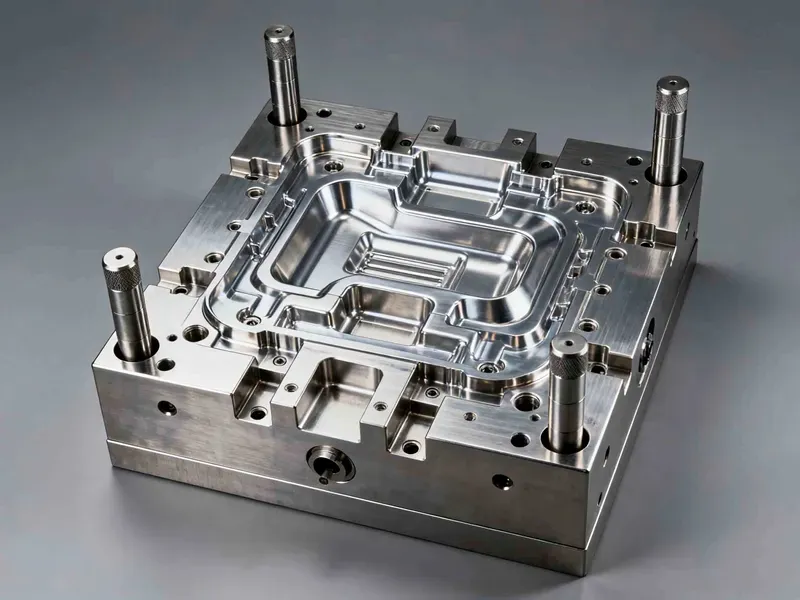
Injection Mold Design & Making
Eliminate unpredictable shrinkage and costly polymer warpage instantly. Our engineered Class 101 injection molds guarantee 1,000,000 continuous high-pressure shots.
Learn More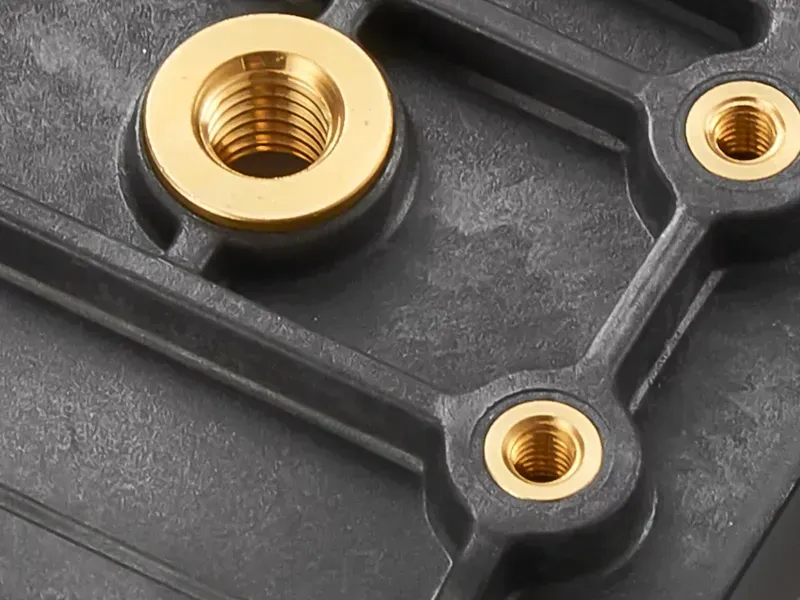
Custom Insert Molding Services
We engineer metal-to-plastic insert molding processes to encapsulate brass and stainless steel components within high-performance thermoplastics. Tooling controls positional tolerances and mitigates differential thermal expansion.
Learn MoreRequest DFM EvaluationSee More Molding ServicesTECHNICAL REFERENCEFrequently Asked Questions
Answers to common questions regarding precision, tooling, materials, and our integrated molding capabilities.We rely on a combination of chemical melt bonding and engineered mechanical interlocks. For chemically disparate substrates like POM and TPU, we design deep undercuts, through-holes, and precision surface textures to guarantee structural retention and prevent delamination under physical stress.
Our strictly audited IATF 16949 certified facility and advanced vertical injection machines allow us to maintain tolerances as tight as 0.02mm. We ensure strict process stability validated by in-line metrology to meet exact micro-molding specifications.
Vertical clamping utilizes gravity to keep complex metallic inserts or rigid substrates perfectly seated before the mold closes. This eliminates the alignment shifts common in horizontal machines, ensuring micron-level positional accuracy and preventing tooling damage.
Flash is mitigated through precision tooling with zero-draft rigid shut-offs and optimized injection pressure control. We conduct thorough mold flow analysis to balance shear rates, ensuring the elastomer fills the cavity completely without bleeding past the intended boundary.
We utilize fully automated loading systems and robotic degating integrated directly with our injection presses. This setup maximizes cycle efficiency, eliminates manual handling variability, and supports continuous production volumes exceeding 100,000 units with a 99.9 percent yield rate.
We implement continuous in-line CCD vision inspection to verify substrate alignment and detect boundary defects. For critical automotive and medical applications, we execute custom leak testing, thermal shock validation, and destructive peel testing to confirm absolute bond strength.
We require maintaining an elastomer wall thickness between 1.5mm and 3.0mm, keeping the soft-to-hard material ratio below 1:2. This engineered uniformity prevents differential shrinkage, eliminates localized sink marks, and maintains dimensionally stable cooling rates.
All precision molds are engineered, machined, and maintained entirely within our facility. This vertical integration allows us to tightly control deep EDM surface finishes, optimize micro-venting locations, and execute rapid tooling modifications to perfect complex encapsulation requirements.

Still have questions?
Our engineering team loves solving complex problems. Chat with us or send your drawing for a review.
Request DFM EvaluationReady to Manufacture With One Accountable Factory?
From in-house tooling to high-volume production — stamping, molding, plating and assembly under one IATF 16949 roof. Send your spec and volume, get a quote within 24 hours.