
Precision LCP Injection Molding: Engineered for High-Frequency Thin-Wall Dimensional Stability
Processing Liquid Crystal Polymer (LCP) requires strict management of its highly anisotropic flow behavior and rapid crystallization rates to eliminate weld-line weakness and structural warpage in thin-walled configurations. We mitigate these inherent rheological complexities by utilizing a strict …
Processing Liquid Crystal Polymer (LCP) requires strict management of its highly anisotropic flow behavior and rapid crystallization rates to eliminate weld-line weakness and structural warpage in thin-walled configurations. We mitigate these inherent rheological complexities by utilizing a strict -40°C dew point drying protocol and ultra-high-speed injection profiles, achieving anisotropy-induced warpage elimination while ensuring the polymer chains align flawlessly to withstand high-temperature SMT reflow environments exceeding 260°C. This level of precise volumetric and thermal control is fully integrated into our IATF 16949 compliant quality system, guaranteeing absolute dimensional stability for high-density EV sensors and demanding industrial electronics.
Extreme Thin-Wall Capability: Defect-free filling down to 0.15mm.SMT Reflow Ready: Stable at 260°C+ lead-free processes.Precision Tooling: In-house fab guaranteeing <0.02mm tolerances.Scalable Production: Rapid prototyping to 10M+ annual units.Request DFM EvaluationSee Material Database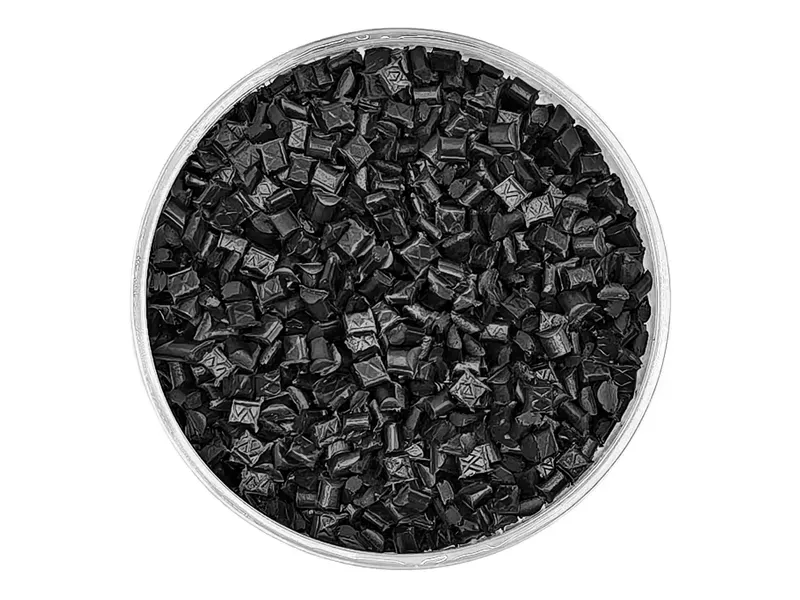
Why Most LCP Projects Fail: The Unforgiving Reality of Liquid Crystal Polymers
LCP is not a standard thermoplastic. Its extreme flow properties and rapid crystallization create a narrow processing window where even minor deviations lead to catastrophic part failure. If your current molder treats LCP like ABS or Nylon, your project is already at risk.
The Unpredictable Warpage
LCP molecules align rigidly in the direction of flow, creating strength differentials up to 10:1 compared to cross-flow direction.
The Consequence: Precision connectors bow or twist after cooling, destroying coplanarity and causing SMT reflow failure.
Weakness at Weld Lines
Due to ultra-fast solidification, meeting flow fronts often fail to fuse completely before freezing.
The Consequence: Parts look visually perfect but snap under minimal insertion stress. These “cold” lines become fatal fracture points.
Micro-Flash & Drift
Under high shear, LCP viscosity drops precipitously, allowing it to flow into mold gaps as small as 0.005mm.
The Consequence: Flash on pins interferes with electrical contact. Manual de-flashing often damages critical features.
Don't let manufacturing risks derail your project. You don't just need a supplier who can run a machine; you need an engineering partner who masters the complex science of precision LCP Injection Molding.
Why Choose UsEngineered Manufacturing Ecosystem: A Purpose-Built System for LCP
We don't just "mold" LCP; we engineer the entire process environment around its unique physics. By integrating specialized machinery, proprietary tooling logic, and material science, we eliminate the variables that cause failure.
LCP-Specific Molding Cell
High-response Sumitomo & Fanuc all-electric presses provide the extreme acceleration needed to fill <0.15mm walls. We utilize “Decoupled Molding” to separate filling from packing, ensuring zero flash.
Integrated Stamping & Insert Molding
“Under One Roof” means total accountability. We manufacture metal terminals and LCP bodies in the same facility, dynamically adjusting stamping dies to match LCP shrinkage for a perfect interference fit.
Tooling for Anisotropy Control
Advanced Moldflow analysis calibrated for Fiber Orientation. We design molds with optimized gate locations and flow leaders to “lock” dimensions against LCP’s natural tendency to warp.
Material Formulation & Regrind
We treat LCP resin with -40°C Dew Point Drying to prevent hydrolysis. Our scientific regrind calculation (<15%) maintains mechanical strength while optimizing unit costs.
LCP Material Science: From Grade Selection to Process Execution
Success in LCP molding starts with the formulation. We guide you through the complex portfolio—from standard glass-filled grades to specialized mineral hybrids—to balance mechanical strength with warp-free stability.
| Property | Test Method | Vectra E130i (Benchmark) | Generic Mineral Grade |
|---|---|---|---|
| Tensile Strength | ISO 527 | 150 MPa | ~110 MPa |
| Flexural Modulus | ISO 178 | 14,000 MPa | ~10,500 MPa |
| Heat Deflection Temp (HDT) | ISO 75 (1.8 MPa) | 270°C | ~250°C |
| Flammability | UL94 | V-0 @ 0.2mm | V-0 @ 0.4mm |
| Moisture Content Limit | Dew Point -40°C | < 0.01% (Hydrolysis Prevention) | < 0.01% (Hydrolysis Prevention) |
| Warpage Risk | - | High (Anisotropic) | Low (Isotropic) |
| Max Regrind Ratio | Tensile Retention | < 15% | < 15% |
Engineers' Guide: LCP vs. PEEK vs. PPS vs. Nylon
LCP is a dominant material for micro-electronics, but is it right for your project? We compare it head-to-head against other high-performance thermoplastics for cost, processability, and durability.
| Property & Metric | LCP (Liquid Crystal Polymer) | PEEK (Polyether Ether Ketone) | PPS (Polyphenylene Sulfide) | Nylon (Polyamide) |
|---|---|---|---|---|
| Primary Battleground | Micro-electronics Dominance | Cost vs. Performance | Thin-Wall Flow limitations | SMT Reflow Stability |
| Thin-Wall Flowability | Exceptional (Ultra-low viscosity easily fills intricate geometries < 0.3mm walls without flashing) | Moderate (Requires higher injection pressures and temperatures) | Poor (Struggles with high injection pressures in micro-grids) | Good (Flows well but prone to flashing in high-precision micro-features) |
| Moisture & SMT Stability | Excellent (Inherently hydrophobic; ensures parts stay dimensionally stable during 260°C reflow) | Excellent (Extremely low moisture absorption and highly stable) | Good (Low moisture absorption, but flow issues restrict micro-SMT applications) | Poor (Hygroscopic; absorbs moisture which causes "blistering" during 260°C reflow) |
| Thermal Performance (HDT) | > 260°C (Equal thermal performance to PEEK) | > 260°C (The "King of Plastics" with exceptional continuous use capabilities) | > 260°C (Highly heat resistant when heavily filled) | < 250°C (Generally unsuitable for modern lead-free IR reflow processes) |
| Structural Characteristics | Anisotropic (Forms a self-reinforcing "skin-core" structure; stronger in flow direction) | Isotropic (Uniform strength distribution in all directions) | Isotropic (Highly crystalline but brittle without extensive glass fiber reinforcement) | Isotropic (Excellent toughness, ductility, and impact resistance) |
| Relative Cost Profile | Moderate (High ROI for complex micro-components) | Extremely High (Costs 5-10x more than LCP) | Low to Moderate (Cost-effective for macro parts) | Low (Highly economical commodity engineering plastic) |
| Expert Verdict & Application | Choose LCP for < 0.3mm walls, blister-free SMT, and cost-efficient high-performance electronics | Choose PEEK primarily when implantable biocompatibility or extreme mechanical wear is mandatory | Choose PPS for macro-scale chemical resistance; avoid for complex micro-grids | Choose Nylon for general structural components kept safely away from extreme reflow heat |
Applied Manufacturing & Technical Validation
Review our documented production records across injection molding and metal component integration. Examine how we resolve complex geometric challenges and strictly control critical dimensions to ensure structural and functional reliability in demanding environments.
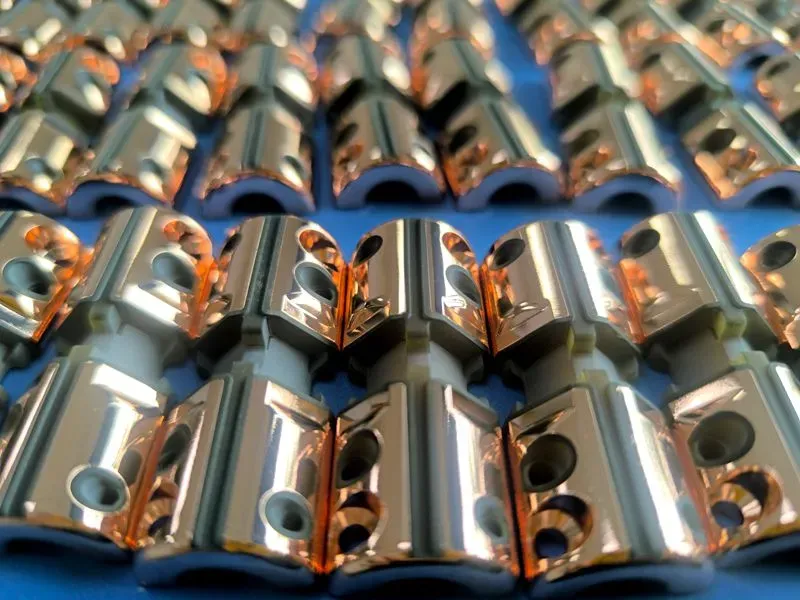
Overcoming RF Leakage: Engineering Zero-Gap Balun Assemblies for MRI Diagnostics
Client Type Leading Tier-1 Medical Imaging OEMProduction Volume 15,000+ units/yearMaterial Used Unfilled Polyetherimide (PEI)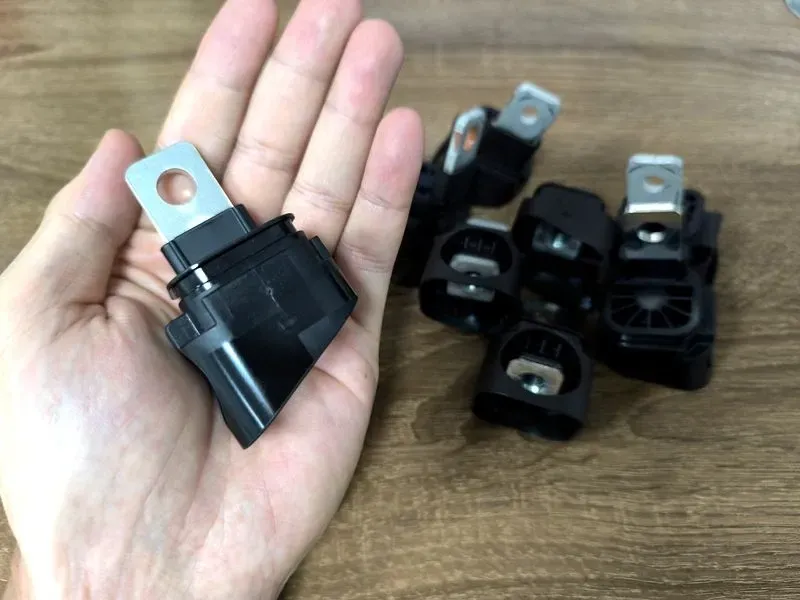
Overcoming CTE Mismatch: Engineering 800V Busbar Terminals for Commercial EVs
Client Type Leading Heavy-Duty Commercial EV Manufacturer - Tier 1Production Volume 250,000+ units/yearMaterial Used High-Purity C11000 Copper & PA6 GF30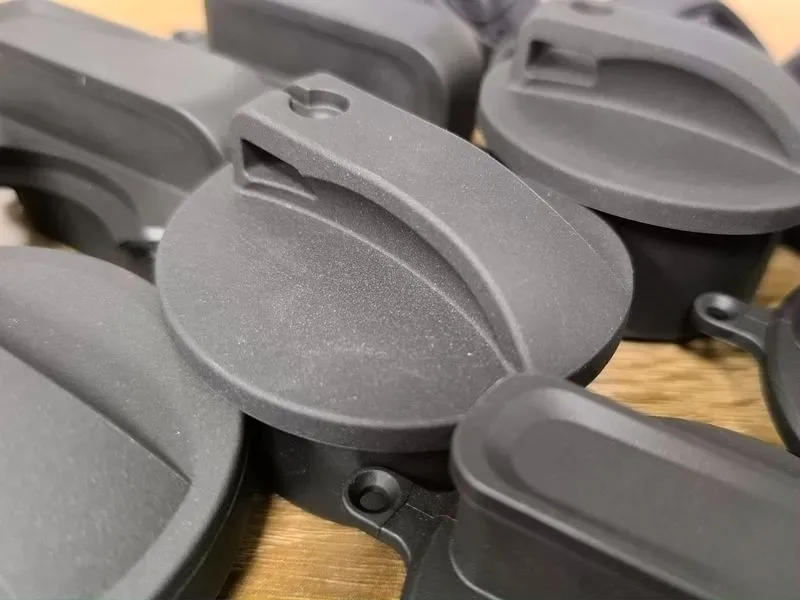
Solving Material Fatigue: Engineering a Monolithic FR-TPU Dust Cover for NEV Platforms
Client Type Leading Chinese NEV Manufacturer (Tier 1)Production Volume 500,000+ units/yearMaterial Used Custom Polyether-based FR-TPU (UL94 V-0)Request DFM EvaluationSee More Case StudiesRESIN CAPABILITIESDeploy Advanced Multi-Material Injection Molding Capabilities
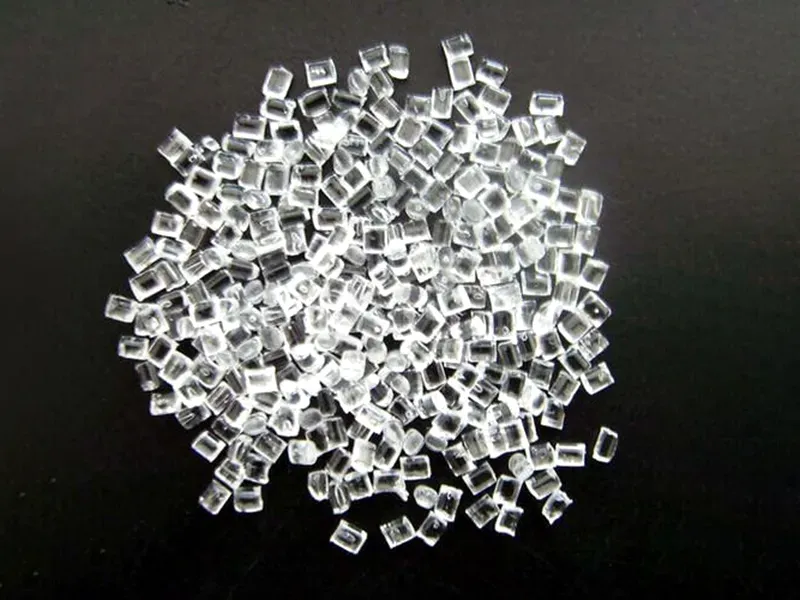
PC Injection Molding
Expert polycarbonate injection molding & in-house stamping. ISO 9001 & IATF 16949 certified. Turnkey PC solutions for optical, medical, and automotive parts.
Learn More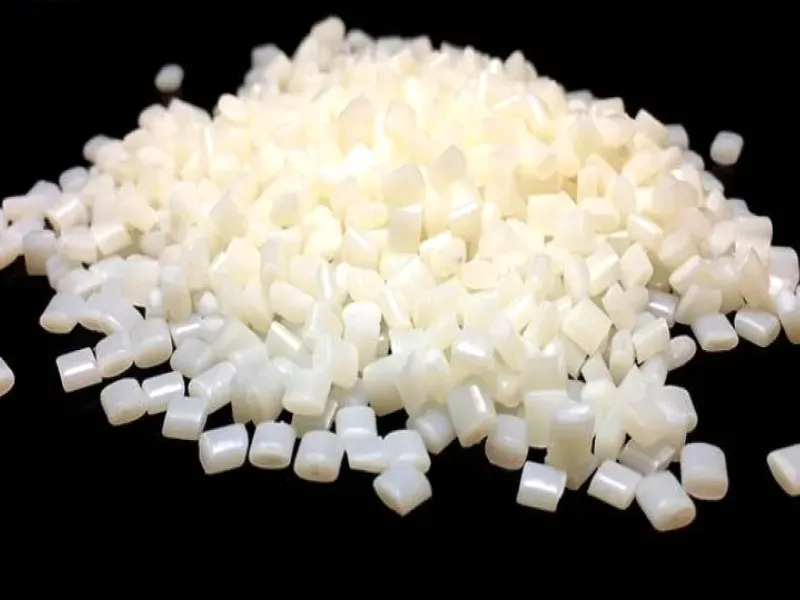
Nylon Injection Molding
IATF 16949 certified source factory mastering PA6, PA66, and PPA. We deliver warp-free, dimensionally stable nylon components utilizing in-house moisture conditioning and bimetallic presses.
Learn More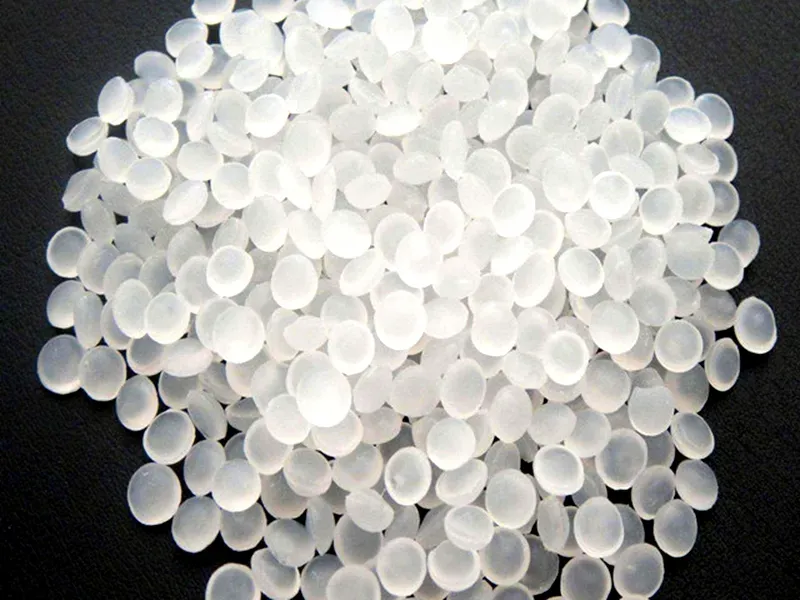
PP Injection Molding
IATF 16949 certified PP injection molding controlling aggressive shrinkage. From durable living hinges to high-volume 800T automotive components.
Learn More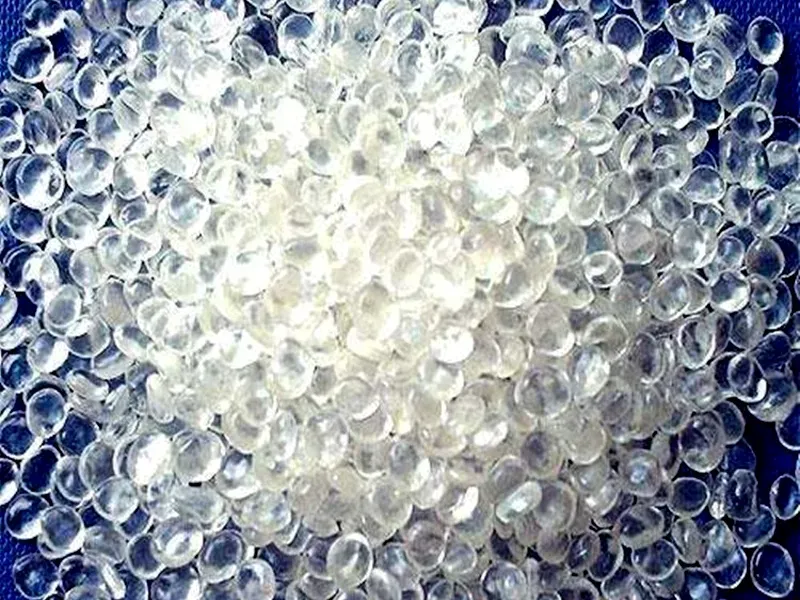
TPU Injection Molding
Master of TPU injection and overmolding. Utilizing 30+ specialized machines to deliver high-precision, defect-free elastomer components.
Learn MoreRequest DFM EvaluationExplore More Molding ServicesTECHNICAL REFERENCEFrequently Asked Questions
Answers to common questions regarding precision, tooling, materials, and our integrated molding capabilities.We manage LCP’s anisotropic nature through Moldflow analysis to optimize gate locations and fiber orientation. Pairing this with high-temp mold controllers and stress-relief annealing guarantees coplanarity under 0.08mm, ensuring components survive lead-free IR reflow without bowing.
Yes. By integrating in-house micro-stamping with vertical rotary insert molding, we dynamically adjust stamping dies to match LCP shrinkage. Combined with decoupled molding and precision shut-offs under 5µm, we consistently deliver flash-free contacts that require no manual trimming.
We achieve defect-free filling down to 0.15mm. High-response Sumitomo and Fanuc all-electric presses provide the extreme injection acceleration required to fill ultra-thin micro-geometries instantly before the rapid crystallization of LCP freezes the flow.
We process all LCP resins through advanced honeycomb dehumidifying dryers to reach a -40°C dew point. This strict protocol ensures the moisture content remains below 0.01% before entering the barrel, entirely preventing brittleness and protecting structural integrity.
LCP glass fibers cause rapid tool wear, so we utilize Powder Metallurgy steels rated at HRC 60+ and tungsten-carbide armored screws. This engineering choice eliminates flash creep and reliably extends tooling asset life to over one million shots.
We utilize a scientifically validated closed-loop recycling system. By strictly maintaining the regrind ratio below 15%, we optimize your unit economics and reduce material costs by up to 20% while retaining 100% of the essential mechanical tensile strength.
We eliminate bulk packaging issues by delivering your micro-connectors in anti-static, vacuum-sealed Embossed Carrier Tapes. This Tape-and-Reel packaging format is completely SMT-ready, allowing direct loading onto your high-speed Pick-and-Place feeders for seamless production.
Our manufacturing ecosystem is fully certified to IATF 16949 for automotive and ISO 13485 for medical devices. From automated micro-metrology to UV laser traceability for UDI compliance, our closed-loop quality control meets the strictest mission-critical standards.

Still have questions?
Our engineering team loves solving complex problems. Chat with us or send your drawing for a review.
Request DFM EvaluationReady to Manufacture With One Accountable Factory?
From in-house tooling to high-volume production — stamping, molding, plating and assembly under one IATF 16949 roof. Send your spec and volume, get a quote within 24 hours.