
Precision Acetal (POM) Injection Molding: Engineered for High-Wear Dimensional Stability
Processing Acetal (POM) requires meticulous thermal and volumetric control to mitigate its inherently high and directional shrinkage, which we address through scientific molding and precision mold temperature regulation to prevent internal vacuum voids. Utilizing optimized holding-pressure profiles…
Processing Acetal (POM) requires meticulous thermal and volumetric control to mitigate its inherently high and directional shrinkage, which we address through scientific molding and precision mold temperature regulation to prevent internal vacuum voids. Utilizing optimized holding-pressure profiles and balanced cooling channels, we master the narrow window of POM crystallization, ensuring environmental stress cracking elimination and exceptional dimensional stability for critical components. This data-driven flow control underpins our IATF 16949 compliant manufacturing system, guaranteeing that high-load gears and low-friction wear parts achieve flawless structural integrity for automotive and demanding industrial applications.
Precision Tolerances: ±0.02mm on complex geometries using "Steel-Safe" tooling strategies.Material Integrity: Authorized processor of DuPont™ Delrin®, Celanese Hostaform®.Integrated Capabilities: In-house metal stamping & machining for superior "Insert Molded" POM components.Certified Quality: IATF 16949 & ISO 9001 certified source factory—no trading intermediaries.Request DFM EvaluationSee Material Database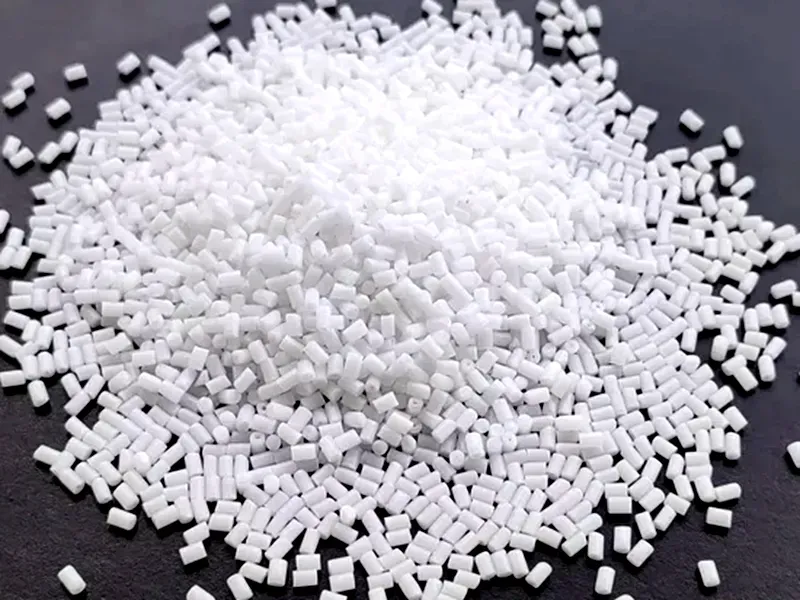
Why 30% of POM Projects Fail with Generalist Molders
Acetal is known as the "Engineer's Plastic," but it is notoriously unforgiving. Without specialized temperature control and flow analysis, critical failure modes go undetected until assembly.
RISK #1: The "48-Hour" Dimension Shift
Acetal exhibits high crystalline shrinkage of 2-3%. Parts often measure within tolerance (±0.05mm) immediately after ejection but contract out of specification after 48 hours if cooling is rushed by generalist molders.
CONSEQUENCE: Dimensional instability that leads to failed assembly fitment 48 hours after parts are molded.
RISK #2: Hidden Vacuum Voids
Insufficient holding pressure causes the outer skin to freeze before the center, pulling material apart internally. These hidden vacuum voids, or centerline porosity, occur even when the external surface appears perfect.
CONSEQUENCE: A 40% reduction in structural integrity causing components to snap unexpectedly under mechanical load.
RISK #3: Material Degradation
Acetal has a narrow processing window where excessive heat or long residence times destroy the molecular chain. This degradation releases formaldehyde gas and manifests as silver streaks or “splay”.
CONSEQUENCE: Irreversible part brittleness and accelerated chemical corrosion of the injection mold steel.
Don't let manufacturing risks derail your project. You don't just need a supplier who can run a machine; you need an engineering partner who masters the complex science of precision Acetal (POM) Injection Molding.
Why Choose UsThe POM Precision Ecosystem: Beyond Just Molding
We provide a vertically integrated manufacturing solution designed specifically to tame the instability of Acetal resins. From raw metal processing to scientific injection parameters, we control every variable.
Resin Authenticity Guaranteed
We eliminate the risk of “regrind” substitution by providing 100% lot traceability for every batch of DuPont Delrin or Celanese Hostaform. Every project includes full COA documentation and expert grade selection, such as PTFE or Glass-filled formulations, to meet your specific friction and strength requirements.
In-House Insert Molding
By manufacturing precision brass and steel inserts internally, we synchronize metal tolerances with POM’s high shrinkage rates to achieve zero tolerance stack-up. This integrated approach eliminates “hoop stress” cracking and ensures superior pull-out strength for high-torque mechanical applications.
Anti-Void Mold Technology
Our proprietary “Steel-Safe” tooling strategies and conformal cooling channels are specifically designed to manage Acetal’s thermal sensitivity. By optimizing gate locations and cooling efficiency, we eliminate internal vacuum voids in thick sections, guaranteeing that structural components remain dense and robust.
Predictive DFM & Warpage
We utilize specialized Moldflow simulations calibrated for Acetal’s 2.0% – 3.0% non-linear shrinkage before any steel is cut. By applying precise “Windage” (inverse geometry compensation), we engineer the mold so that the part naturally warps into its specified tolerance rather than out of it.
Homopolymer vs. Copolymer & Specialty Formulations
Choosing the correct Acetal grade is the single most critical decision in your project. We navigate the trade-offs between tensile strength and chemical resistance.
| Material Specification | Homopolymer (Delrin®) | Copolymer (Celcon®) |
|---|---|---|
| Profile Alias | The Powerhouse | The Survivor |
| Key Superpower | Highest crystallinity, superior tensile strength, stiffness, and fatigue resistance. | Superior resistance to hydrolysis (hot water), strong alkalis, and thermal degradation. |
| Best Applications | High-load gears, springs, and thin-walled mechanical parts. | Plumbing components, fuel systems, and long-term chemical exposure. |
| Engineering Reality | Prone to "centerline porosity" in thick sections. Requires precise gate location strategies during molding. | Free from centerline porosity. Inherently lower friction coefficient, ideal for silent sliding mechanisms. |
| Thermal Performance | Higher melting point and excellent short-term mechanical performance under thermal load. | Superior long-term dimensional stability and resistance to thermal aging. |
| Chemical Tolerance | Sensitive to strong acids and bases; better suited for neutral environments. | Highly resistant to a broad pH range, including harsh alkalis, bleaches, and automotive fuels. |
| PTFE / Low Friction Blend | Blended with Teflon® fibers to reduce stick-slip behavior and eliminate squeaking without external lubrication. | Offers exceptional wear resistance and silent operation, further enhancing its natural lubricity. |
| Glass Reinforced Customization | Can be reinforced for maximum rigidity, acting as a direct lightweight replacement for metal components. | 10-25% GF blend doubles tensile strength and drastically reduces thermal expansion for precision parts. |
| UV Stabilized Customization | Custom formulated to maintain mechanical integrity during outdoor exposure. | Prevents "chalking" and surface degradation under intense sunlight; critical for automotive exterior clips and window hardware. |
Material Selection Guide: POM vs. The Alternatives
Engineers often face the "Triangle of Indecision" between Acetal, Nylon, and Polyester. We simplify the choice based on three critical failure factors: Moisture, Friction, and Electricity.
| Design & Failure Factor | POM (Acetal) | Nylon (Polyamide) | Polyester (PET/PBT) |
|---|---|---|---|
| Moisture Absorption | Excellent resistance; dimensional stability maintained in wet environments. | High absorption; swells and loses tensile strength over time. | Good stability; low absorption but highly sensitive to hydrolysis. |
| Friction & Wear | Excellent self-lubricating properties; low coefficient of friction. | Very good wear resistance; friction increases with moisture absorption. | Good wear resistance; typically requires additives for moving parts. |
| Electrical Properties | Good insulator; properties remain stable across various conditions. | Fair; dielectric strength significantly drops with water absorption. | Excellent dielectric properties; ideal for electronic enclosures. |
| Wall Thickness | Range: 0.75mm - 3.0mm. Must maintain uniformity to avoid voids. | Range: 0.8mm - 3.2mm. Uniformity required to prevent sink marks. | Range: 0.7mm - 3.0mm. Consistent flow path required for structural integrity. |
| Radii & Notch Sensitivity | Min Radius: 0.5mm. Highly notch-sensitive; sharp corners will lead to cracks. | Min Radius: 0.5mm. Less notch-sensitive but generous radii recommended. | Min Radius: 0.5mm. Radii heavily reduce stress concentrations. |
| Draft Angles | Min: 0.5° (1.0° for texture). Required for smooth ejection without drag marks. | Min: 0.5° to 1.0°. Facilitates easier part release due to shrinkage. | Min: 0.5° to 1.0°. Standard draft requirements apply. |
Applied Manufacturing & Technical Validation
Review our documented production records across injection molding and metal component integration. Examine how we resolve complex geometric challenges and strictly control critical dimensions to ensure structural and functional reliability in demanding environments.
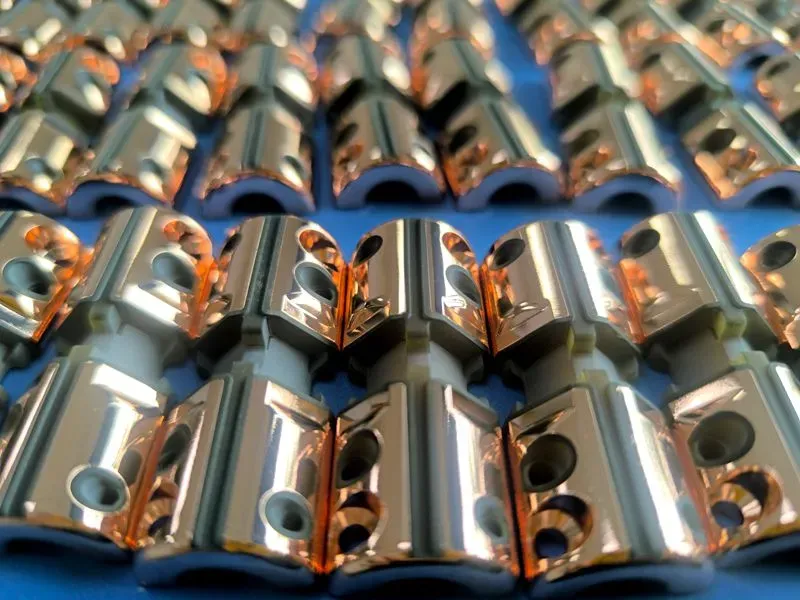
Overcoming RF Leakage: Engineering Zero-Gap Balun Assemblies for MRI Diagnostics
Client Type Leading Tier-1 Medical Imaging OEMProduction Volume 15,000+ units/yearMaterial Used Unfilled Polyetherimide (PEI)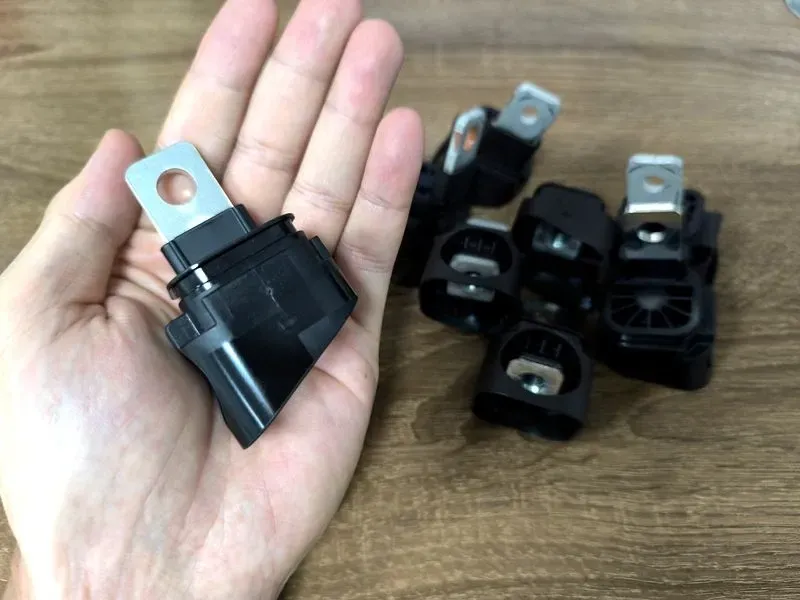
Overcoming CTE Mismatch: Engineering 800V Busbar Terminals for Commercial EVs
Client Type Leading Heavy-Duty Commercial EV Manufacturer - Tier 1Production Volume 250,000+ units/yearMaterial Used High-Purity C11000 Copper & PA6 GF30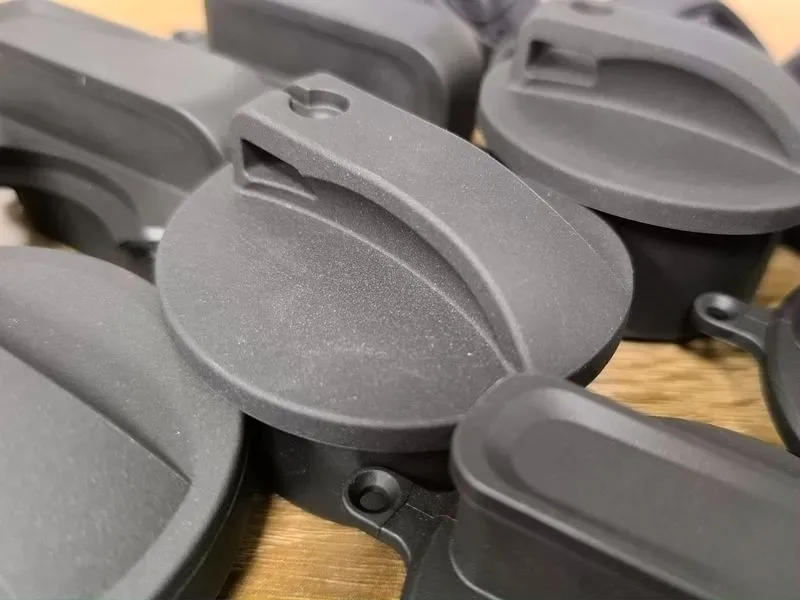
Solving Material Fatigue: Engineering a Monolithic FR-TPU Dust Cover for NEV Platforms
Client Type Leading Chinese NEV Manufacturer (Tier 1)Production Volume 500,000+ units/yearMaterial Used Custom Polyether-based FR-TPU (UL94 V-0)Request DFM EvaluationSee More Case StudiesRESIN CAPABILITIESDeploy Advanced Multi-Material Injection Molding Capabilities
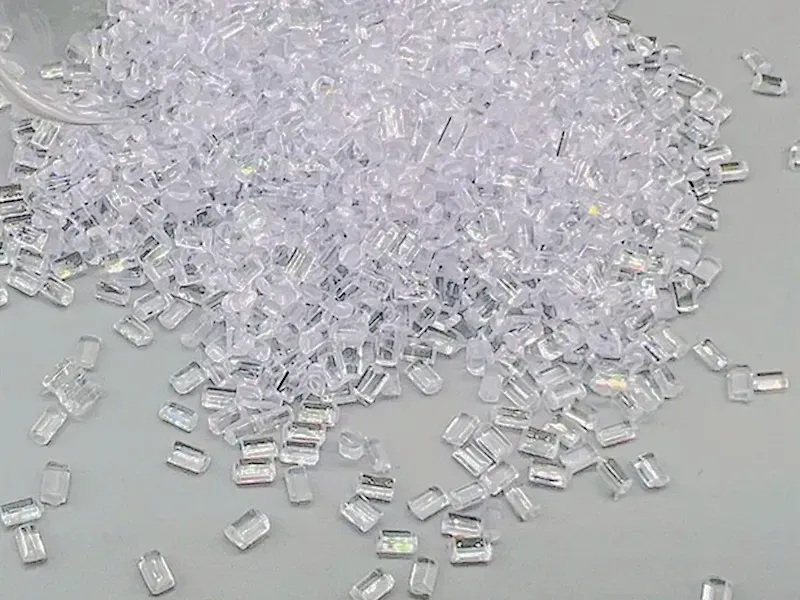
PETG Injection Molding
Achieve glass-like clarity and superior impact resistance. We utilize -40°C dew point drying and low-shear injection for defect-free, high-yield PETG molding.
Learn More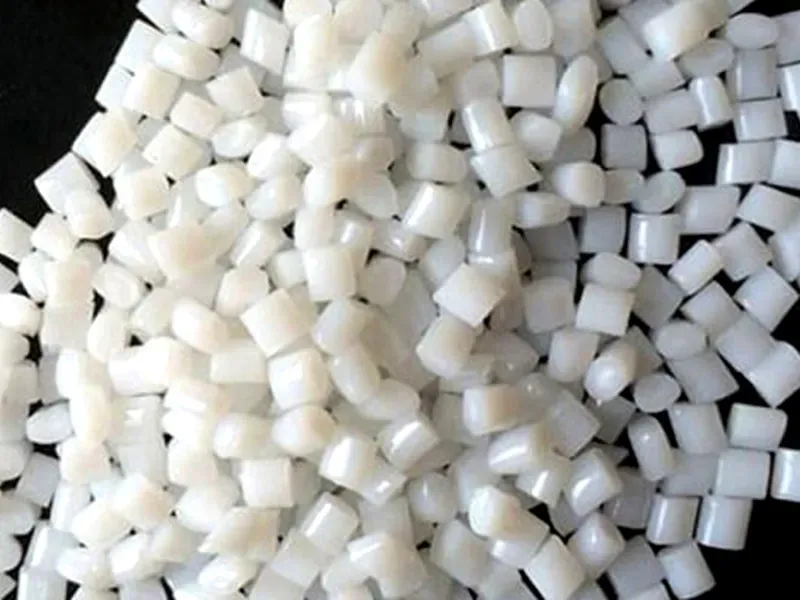
PBT Injection Molding
From complex geometries to high-volume production, we specialize in expert PBT processing. Optimized for dimensional stability and chemical resistance—delivered with speed and precision.
Learn More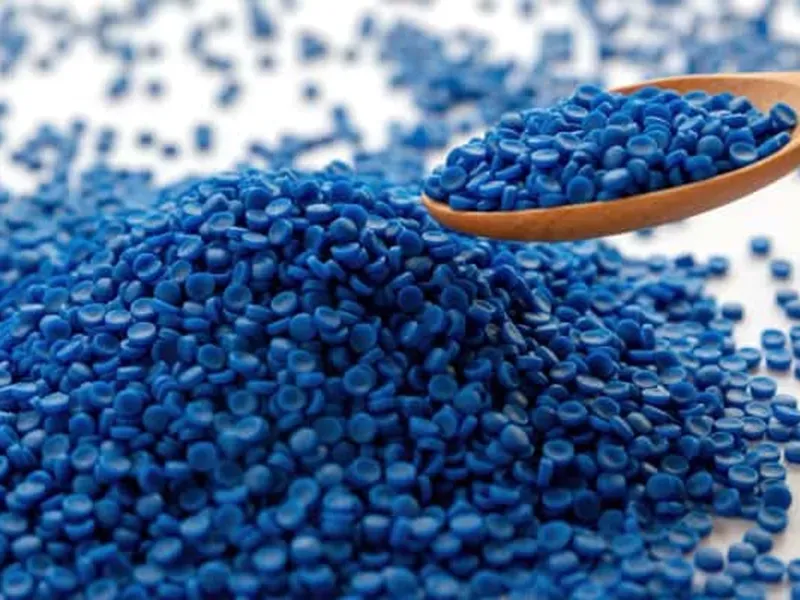
LDPE Injection Molding
Expert LDPE injection molding delivering defect-free soft plastics. Featuring 64+ cavity high-volume scalability and advanced cooling for zero warpage.
Learn More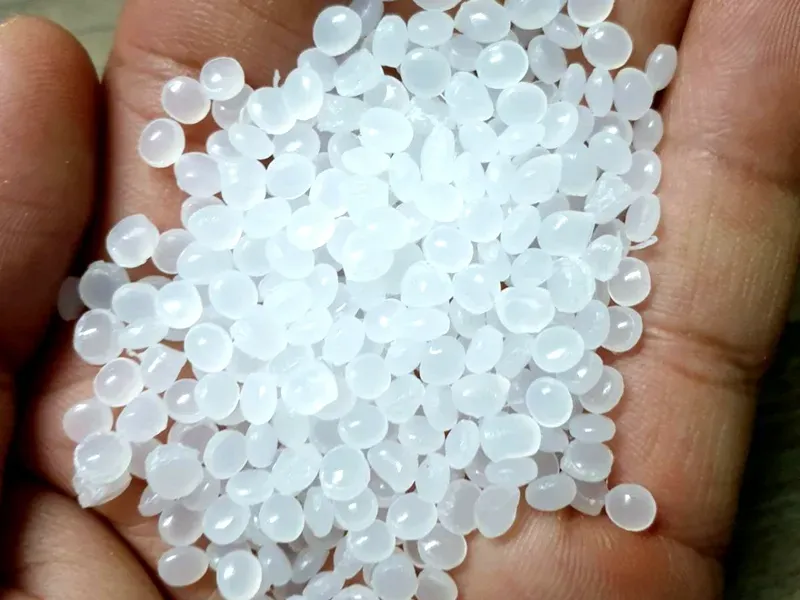
LLDPE Injection Molding
Mastering soft plastics with precision LLDPE injection molding. We eliminate warpage and ensure ESCR durability for high-volume components.
Learn MoreRequest DFM EvaluationExplore More Molding ServicesTECHNICAL REFERENCEFrequently Asked Questions
Answers to common questions regarding precision, tooling, materials, and our integrated molding capabilities.We use Decoupled II scientific molding and proprietary anti-void mold technology. By switching from fill to pack based on cavity pressure and utilizing optimized gate locations, we eliminate centerline porosity and ensure structural parts remain 100% dense under high pressure.
Generalist molders often rush the cooling process, locking in unstable molecular structures. We enforce a strict “48-Hour Rule,” quarantining parts to allow full post-mold crystalline shrinkage (2-3%) before final QC. This guarantees your dimensions remain permanently stable in the field.
Standard off-the-shelf inserts have sharp knurls that act as stress concentrators. We manufacture custom “Anti-Crack” radiused inserts in-house and pre-heat them to 80°C-100°C prior to molding. This matches thermal expansion and distributes stress evenly, permanently eliminating hoop stress cracking.
Choose Homopolymer (Delrin®) for the highest tensile strength, stiffness, and fatigue resistance in high-load mechanical gears. Choose Copolymer for superior resistance to hot water hydrolysis, strong alkalis, and thermal degradation. Our engineers provide expert tribological grade selection to match your exact application.
We consistently hold ±0.02mm on complex geometries. We achieve this by running predictive Moldflow® warpage analysis (applying inverse Windage compensation) before cutting steel, and by utilizing precise CNC post-machining to hit critical H7 bearing fits that are impossible to mold directly.
POM’s low surface energy makes standard adhesives and paints peel off. Instead, we offer advanced secondary operations: ultrasonic welding for hermetic molecular bonds, fiber laser foaming for indelible permanent marking, and VDI 3400 mold texturing for premium, paint-free cosmetic finishes.
Processing POM releases formaldehyde gas that aggressively corrodes standard steel, leading to black specks and material degradation. Our injection units feature hardened Chrome-Molybdenum alloy screws that resist chemical attack, ensuring your melt remains 100% pure without molecular breakdown.
We are a direct, IATF 16949 and ISO 9001:2015 certified source manufacturing factory. By working with us, you eliminate trading intermediaries and communicate directly with senior tooling engineers, reducing your Total Cost of Ownership (TCO) while securing automotive-grade quality control.

Still have questions?
Our engineering team loves solving complex problems. Chat with us or send your drawing for a review.
Request DFM EvaluationReady to Manufacture With One Accountable Factory?
From in-house tooling to high-volume production — stamping, molding, plating and assembly under one IATF 16949 roof. Send your spec and volume, get a quote within 24 hours.